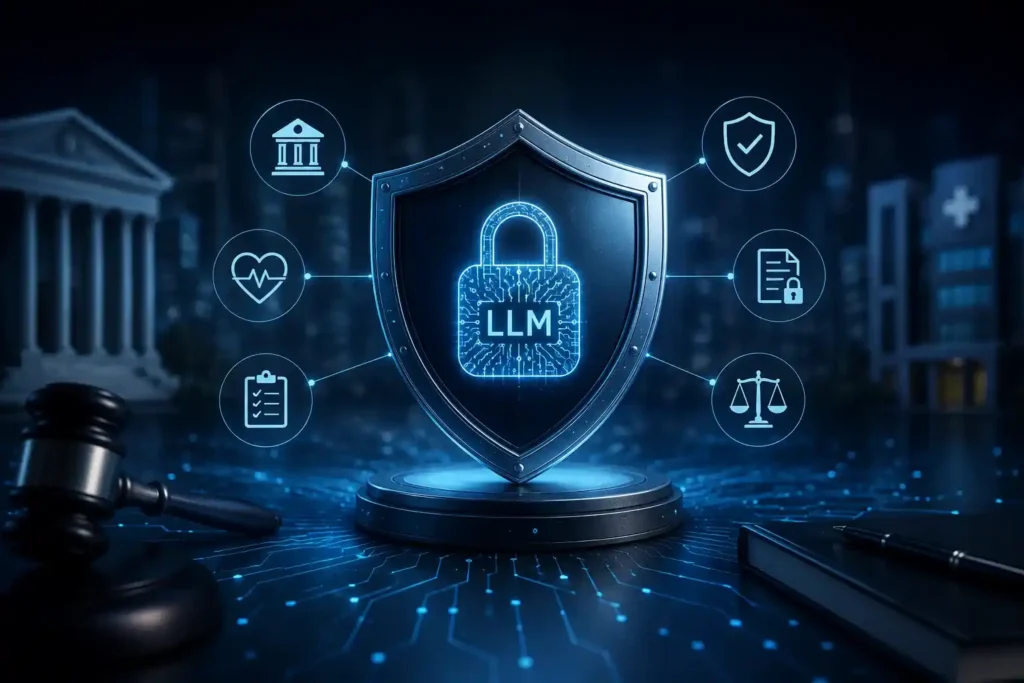
Summary: Secure LLM integration is essential for financial and healthcare organizations handling sensitive data. This guide explains how private AI deployments, encryption, anonymization, role-based access controls, audit logging, and continuous monitoring help protect customer information and maintain compliance with regulations like HIPAA, PCI-DSS, and GDPR. By adopting a security-first architecture and strong governance practices, organizations can confidently scale AI solutions while reducing risks, preventing data breaches, and preserving customer trust.
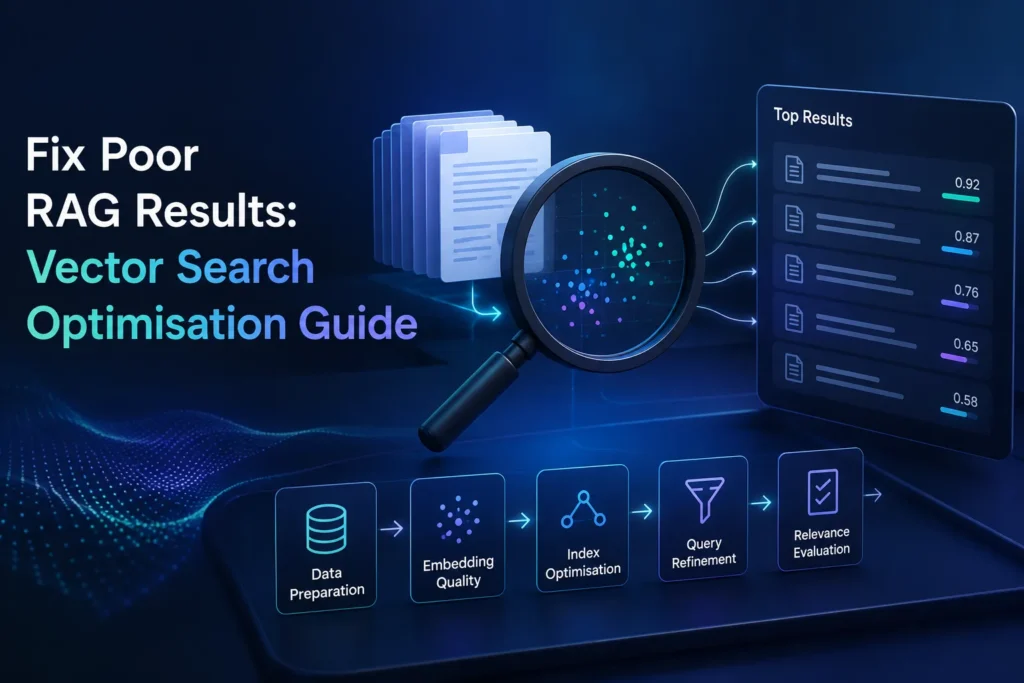
Fix Poor RAG Results: Vector Search Optimisation Guide
Summary: Enterprise RAG performance depends less on the size of the LLM and more on the quality of retrieval. By optimising document chunking, embeddings, hybrid search, metadata filtering, reranking, and evaluation methods, organizations can deliver more accurate and reliable AI responses. A strong retrieval pipeline ensures LLMs receive the right context, reducing hallucinations and improving enterprise AI outcomes. Businesses that invest in retrieval optimisation can build scalable, trustworthy, and high-performing RAG systems for the future.
Enterprise Multi-Agent LLM Orchestration: Build Autonomous AI Teams That Actually Get Work Done
Summary: Enterprise multi-agent LLM orchestration replaces single AI assistants with specialized AI teams that collaborate to handle complex business workflows more accurately and efficiently. By assigning dedicated roles for planning, research, compliance, analysis, writing, and validation, organizations can reduce hallucinations, improve scalability, and maintain better governance. Powered by frameworks like CrewAI and LangGraph, these autonomous AI systems integrate enterprise knowledge, shared memory, and human oversight to deliver reliable, production-ready automation that drives real business value.
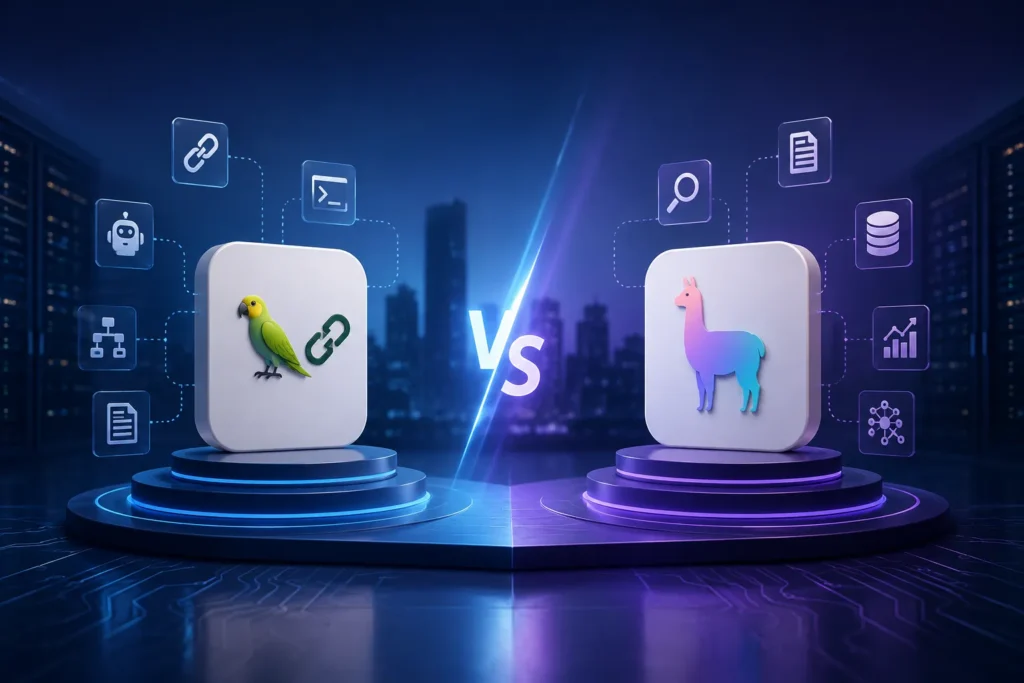
Best Frameworks for Enterprise LLM Deployment: LangChain vs LlamaIndex
Summary: The successful deployment of the LLMs on the Enterprise level is not only about selecting an appropriate language model but also about the proper framework that will help to manage the process of orchestration, data retrieval, scaling, and production. The LangChain framework does a great job in creating AI workflows, agents, and application logic, whereas LlamaIndex is very effective when it comes to enterprise knowledge retrieval and Retrieval Augmentation Generation (RAG). However, most companies choose to leverage both frameworks along with other solutions such as CrewAI, etc.
Secure LLM Integration: Enterprise Compliance & Data Privacy
Summary: Choosing between LLM fine-tuning and integration depends on your business goals, budget, and scalability needs. Integration offers faster deployment, lower upfront costs, and quicker ROI, making it the best fit for most organisations. Fine-tuning requires greater investment but delivers higher accuracy, domain expertise, and long-term value for specialised use cases. Understanding both approaches helps businesses maximize AI performance while balancing costs, operational complexity, and long-term return on investment.