Summary: Choosing between LLM fine-tuning and integration depends on your business goals, budget, and scalability needs. Integration offers faster deployment, lower upfront costs, and quicker ROI, making it the best fit for most organisations. Fine-tuning requires greater investment but delivers higher accuracy, domain expertise, and long-term value for specialised use cases. Understanding both approaches helps businesses maximize AI performance while balancing costs, operational complexity, and long-term return on investment.

RAG Architecture Guide: Connect Enterprise Data to LLMs Securely
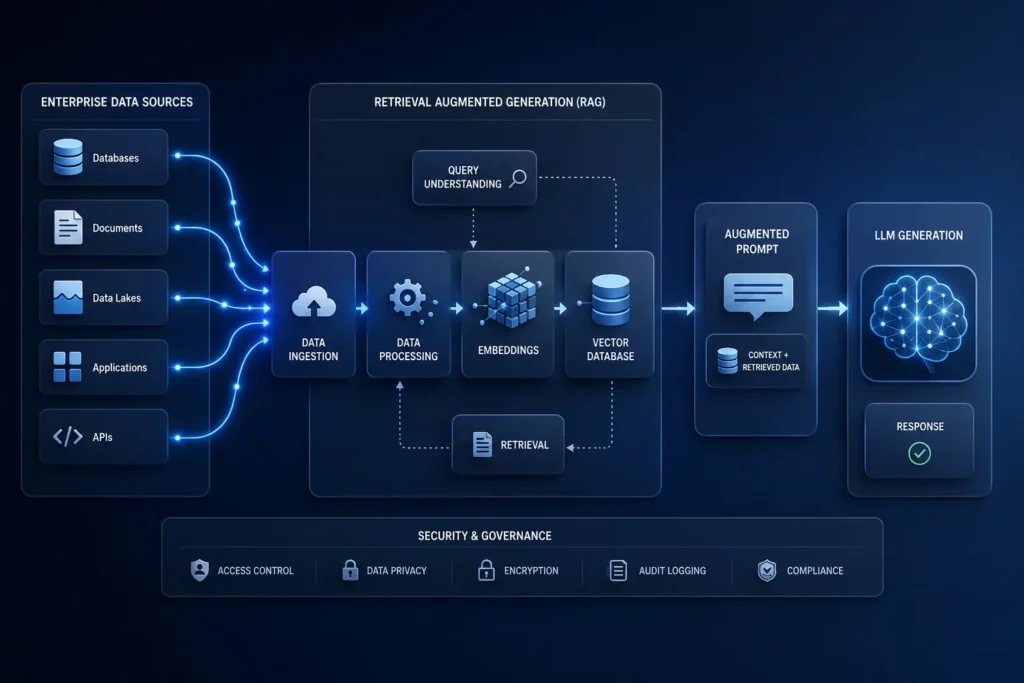
Summary: Ever wondered how AI can answer questions using your company’s latest internal data instead of outdated knowledge? This blog explains how Retrieval-Augmented Generation (RAG) helps enterprises connect large language models with internal data to deliver accurate, secure, and up-to-date responses. It outlines limitations of standalone LLMs and details the full RAG pipeline, including data ingestion, document chunking, embeddings, vector databases, reranking, and prompt augmentation. It also highlights security, scalability, and best practices for enterprise-ready AI systems.
Zero-Leak Lead Gen: Automating Your Sales Funnel with Zapier & HubSpot
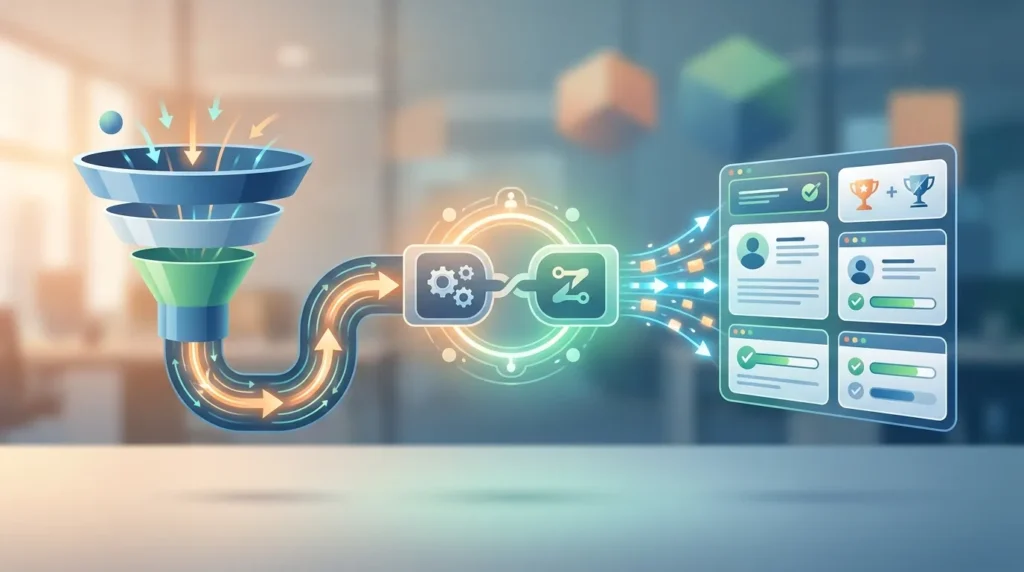
Summary: This article explains how Zapier lead generation automation helps businesses capture, qualify, and nurture leads without manual effort. By connecting forms, CRM platforms, email marketing tools, and communication apps, Zapier automates lead management from initial contact to follow-up. The guide covers setting up Zapier, choosing the right plan, integrating tools like HubSpot, Facebook Lead Ads, LinkedIn, and PhantomBuster, and implementing lead scoring and nurturing workflows. It also highlights key performance metrics, common automation mistakes to avoid, and best practices for creating a zero-leak lead generation system that improves response times, conversions, and overall sales efficiency.