Summary:
2026 is the year automation gets smarter. Instead of following rigid rules, n8n AI agents can think, remember, adapt, and take action using tools like LangChain and RAG. With multi-agent systems, human approval checkpoints, and cost controls, businesses can build intelligent workflows that reliably handle complex tasks. The future isn’t just about automating processes; it’s about creating digital brains that learn, reason, and scale with your business.

The Invisible Concierge: How Agentic AI is Redefining Travel in 2026
Summary:Blockchain is transforming the automotive industry in 2026 by creating tamper-proof digital records for vehicles, parts, and ownership. From preventing odometer fraud and counterfeit components to enabling smart maintenance, dynamic insurance, and secure autonomous driving, blockchain brings trust and transparency to every stage of a vehicle’s lifecycle. It also supports new regulations like the EU Battery Passport by tracking sourcing and sustainability data. The result is a safer, smarter, and more connected automotive ecosystem built on verified, decentralized information.
Closing the Security Gap: A Law Firm’s Guide to Modern Cloud Infrastructure and Compliance
Summary: Law firms face rising cybersecurity threats in 2026, including ransomware, AI-driven phishing, and stricter compliance requirements. Modern cloud infrastructure helps protect sensitive client data through Zero Trust security, passwordless authentication, automated compliance, and continuous monitoring. AI-powered legal assistants improve efficiency but must operate within secure environments to maintain confidentiality. By implementing security audits, phishing-resistant MFA, endpoint protection, and governance frameworks, firms can reduce risk, meet regulatory obligations, strengthen client trust, and safeguard their reputation while becoming more efficient and resilient in an increasingly digital legal landscape.
Intelligent Document Processing (IDP) with AI and RPA: A Complete Implementation Guide for 2026
Summary: Intelligent Document Processing (IDP) combines AI, machine learning, and RPA to automate document understanding, data extraction, and system integration far beyond traditional OCR. It helps businesses eliminate manual data entry, reduce errors, speed up processing, and unlock actionable data from PDFs and paper documents. Successful implementation requires process auditing, the right cloud or on-prem tech stack, strong data governance, and human-in-the-loop validation. As IDP evolves toward agentic AI, organizations gain a major competitive advantage through faster, smarter, and more scalable operations.
Data Architecture for AI in Consumer Goods: Building a Foundation for 2026
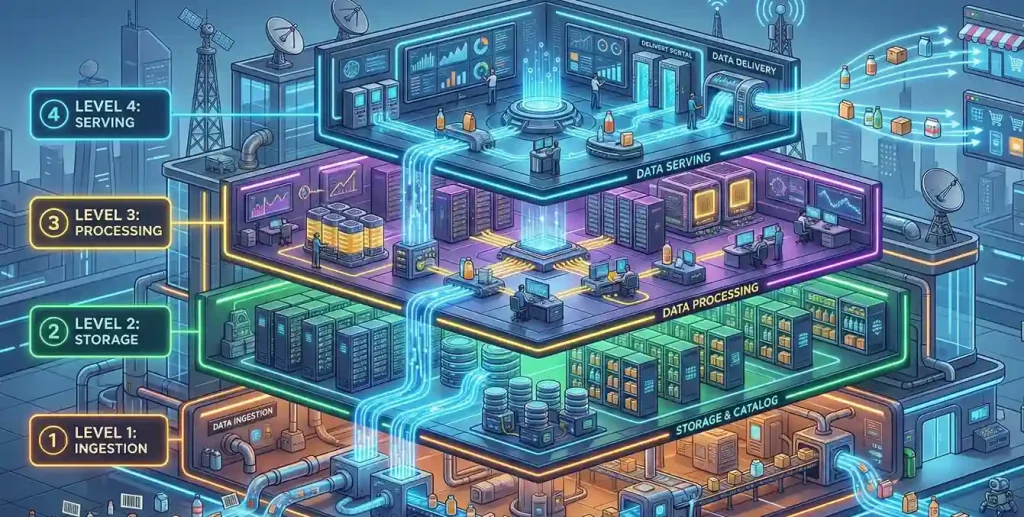
Summary: Successful AI in consumer goods depends on strong data architecture, not just advanced models. Companies must eliminate data silos, implement unified data fabrics, establish master data management, and build scalable AI-ready data pipelines. A modern AI stack includes ingestion, storage, processing, and serving layers that support both real-time and batch workloads. Automated governance, security, compliance, and data quality controls are essential for reliable AI outcomes. The key to long-term success is creating a scalable, secure, and unified data foundation that supports enterprise-wide intelligence.
MLOps in FMCG: Deployment & Monitoring Challenges
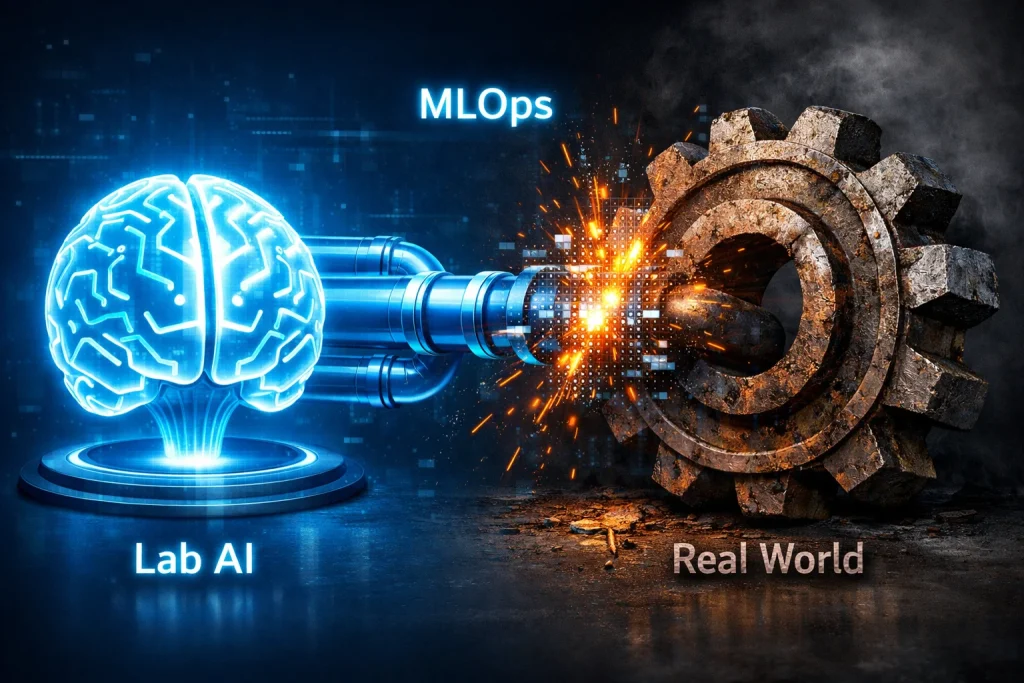
Summary: MLOps helps FMCG companies turn AI models into reliable business assets by managing deployment, monitoring, retraining, and governance. The biggest challenges include fragmented data, model drift, scalability, and integrating AI with legacy systems. Successful MLOps strategies use continuous monitoring, automated retraining, version control, explainable AI, and strong security practices. A hybrid cloud-and-edge infrastructure provides both real-time responsiveness and long-term analytics. Ultimately, MLOps ensures AI remains accurate, scalable, and valuable, enabling FMCG brands to achieve sustainable ROI from their AI investments.
AI Demand Forecasting in FMCG: Methods, Models & Real Examples
Summary: AI demand forecasting helps FMCG companies improve accuracy, reduce waste, and optimize inventory by analyzing historical sales, real-time market signals, weather, promotions, and consumer behavior. Advanced models such as XGBoost, RNNs, and Transformers identify patterns and predict demand more effectively than traditional spreadsheets. Key benefits include fewer stockouts, lower excess inventory, and better supply chain planning. Success depends on clean, connected data, explainable AI, and gradual implementation. Companies that embrace AI forecasting gain a significant competitive advantage in low-margin, fast-moving markets.
The Ultimate Guide to AI in FMCG Industry: Trends, Use Cases & Implementation Challenges
Summary: AI is transforming the FMCG industry by improving demand forecasting, supply chain efficiency, manufacturing, customer personalization, and sustainability. From predicting consumer behaviour to reducing waste and optimizing operations, AI helps brands make faster, data-driven decisions. However, successful implementation requires overcoming challenges like poor data quality, legacy systems, and talent shortages. By starting with focused use cases, building strong data foundations, and scaling proven solutions, FMCG companies can unlock AI-driven growth and resilience.
How AI in Healthcare Is Transforming Patient Care in 2025
Summary: AI is transforming healthcare by enabling faster diagnosis, personalized treatments, predictive care, and smarter hospital operations. From AI-powered medical imaging and drug discovery to virtual assistants and wearable monitoring, technology is helping doctors make better decisions while improving patient experiences. However, responsible AI adoption requires strong data privacy, ethical practices, and human oversight. The future of healthcare lies in combining artificial intelligence with medical expertise to create proactive, efficient, and patient-centered care.
Real-World AI in Action: 10 AI Business Use Cases You Need to Know
Summary: AI is transforming businesses across industries by automating processes, improving decision-making, and delivering personalized customer experiences. From customer service and healthcare to finance, manufacturing, logistics, and cybersecurity, AI helps organizations increase efficiency, reduce costs, and drive innovation. While successful adoption requires careful attention to data privacy, ethics, and skilled oversight, businesses that start implementing AI strategically today will gain a significant competitive advantage and be better prepared for future growth.