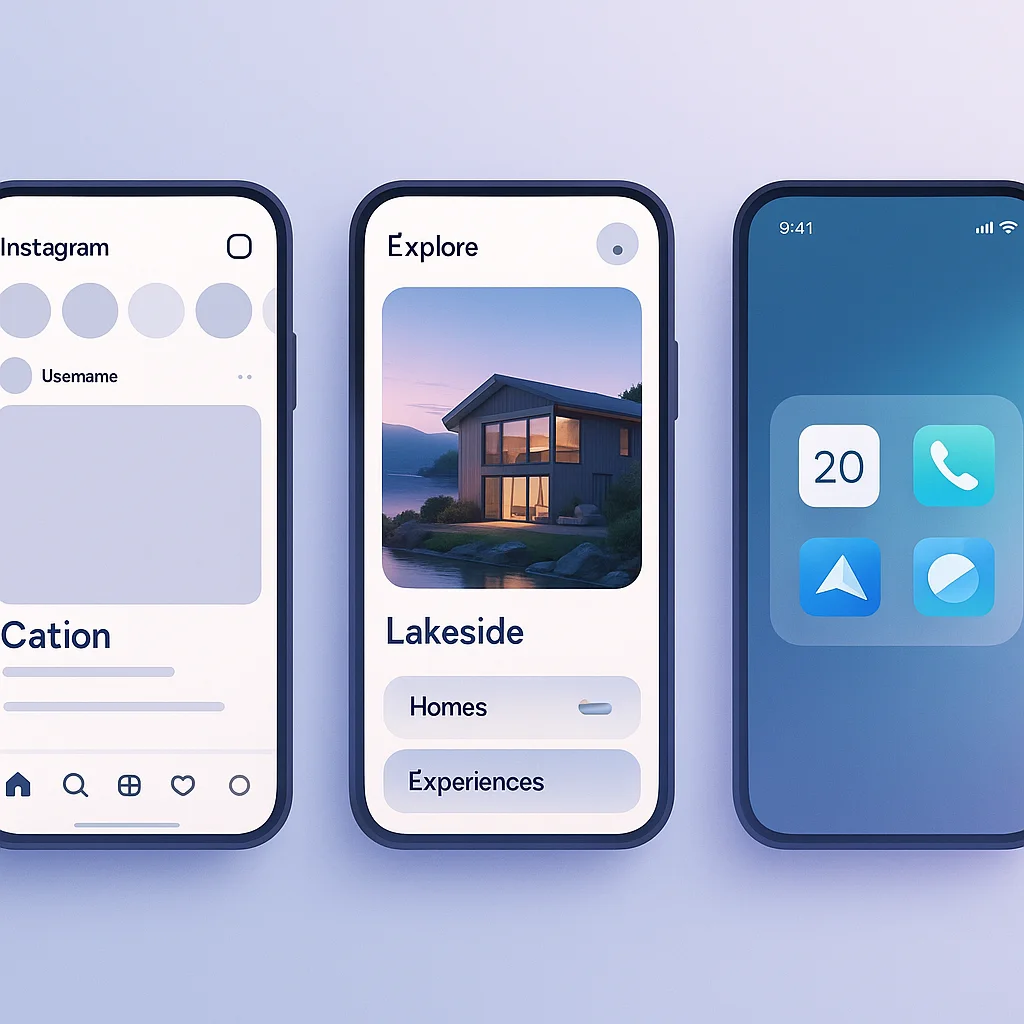
Summary: Complexion Reduction is a 2025 mobile design trend that takes minimalism further with bold typography, simple icons, limited colour, and generous whitespace. Inspired by redesigns from Instagram, Airbnb, and Apple, it reduces cognitive load and helps users navigate apps more efficiently. By focusing on clarity and usability over visual clutter, this approach creates cleaner, faster, and more intuitive user experiences while giving brands a modern, polished digital presence.
Skynet Blockchain on Chip – The Game-Changing IoT Revolution
Summary: Skynet’s Blockchain on Chip introduces a new era for IoT by combining blockchain security, AI acceleration, and license-free RISC-V architecture directly into hardware. Its chip enables secure device identities, machine-to-machine payments, decentralized computing, and on-device AI processing without relying heavily on cloud infrastructure. By integrating hardware, blockchain networks, and intelligent applications, Skynet aims to transform IoT devices from passive connected systems into autonomous participants in a decentralized digital economy.
Icons in UX Design: Making Them Work for Users
Summary: Icons play a vital role in UX design by saving space, improving recognition, and creating cleaner interfaces. However, poorly designed or unfamiliar icons can confuse users and increase friction. Universal symbols work best, but many icons require supporting labels for clarity. User testing shows that combining icons with text improves understanding significantly. Effective UX icons should be simple, consistent, and intuitive; helping users complete tasks without unnecessary guessing.
AI Covid-19 Breakthrough: Scientists Uncover Potential Treatment
Summary: AI played a crucial role in COVID-19 research by helping scientists identify baricitinib as a potential treatment through advanced data analysis and drug repurposing. By scanning scientific research, biological databases, and disease pathways, AI accelerated the search for effective therapies. Although not a standalone cure, this breakthrough demonstrated how artificial intelligence can support healthcare innovation, speed up drug discovery, and improve responses to future global health emergencies.