Summary: Many businesses outgrow DIY Zapier automations as workflows become more complex, costly, and difficult to manage. Common warning signs include frequent errors, tangled processes, unnecessary task usage, manual data cleanup, unsupported app integrations, and uncontrolled “shadow automation” created by teams. As companies adopt AI-powered workflows, proper governance, error handling, and human oversight become even more important. Working with a Zapier consultant helps optimize costs, improve reliability, connect custom systems, and build scalable automations that support business growth instead of slowing it down.
Intelligent Document Processing (IDP) with AI and RPA: A Complete Implementation Guide for 2026
Summary: Intelligent Document Processing (IDP) combines AI, machine learning, and RPA to automate document understanding, data extraction, and system integration far beyond traditional OCR. It helps businesses eliminate manual data entry, reduce errors, speed up processing, and unlock actionable data from PDFs and paper documents. Successful implementation requires process auditing, the right cloud or on-prem tech stack, strong data governance, and human-in-the-loop validation. As IDP evolves toward agentic AI, organizations gain a major competitive advantage through faster, smarter, and more scalable operations.
Workflow Automation vs RPA: Choosing the Right Engine for Your Business Efficiency
Summary: Workflow Automation and RPA both improve efficiency but solve different problems. Workflow Automation connects modern cloud applications through APIs to streamline end-to-end business processes, while RPA mimics human actions within software interfaces, making it ideal for legacy systems without API access. Businesses should choose based on whether they need system integration or task emulation. In many cases, a hybrid approach delivers the best results by combining workflow orchestration with RPA execution. The key is matching the right automation tool to the business need.
Data Architecture for AI in Consumer Goods: Building a Foundation for 2026
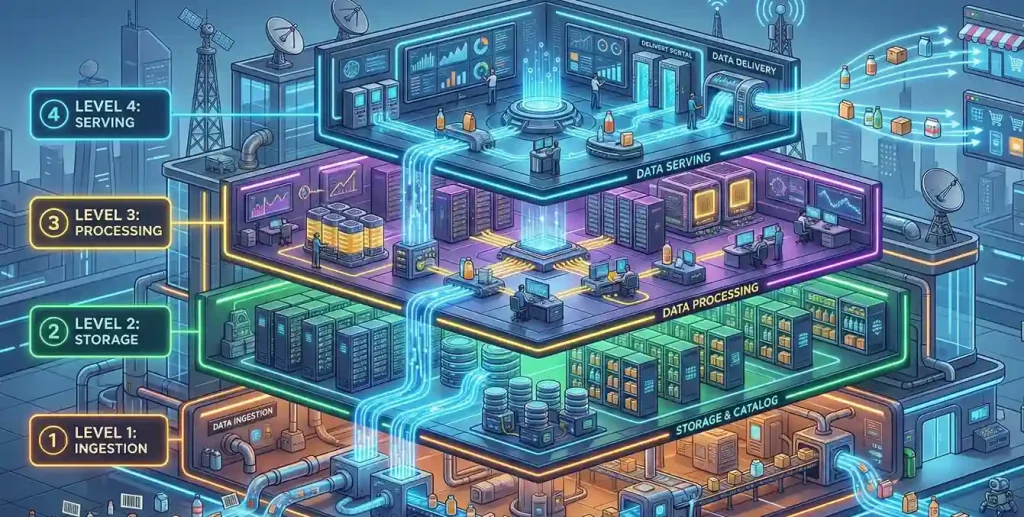
Summary: Successful AI in consumer goods depends on strong data architecture, not just advanced models. Companies must eliminate data silos, implement unified data fabrics, establish master data management, and build scalable AI-ready data pipelines. A modern AI stack includes ingestion, storage, processing, and serving layers that support both real-time and batch workloads. Automated governance, security, compliance, and data quality controls are essential for reliable AI outcomes. The key to long-term success is creating a scalable, secure, and unified data foundation that supports enterprise-wide intelligence.
MLOps in FMCG: Deployment & Monitoring Challenges
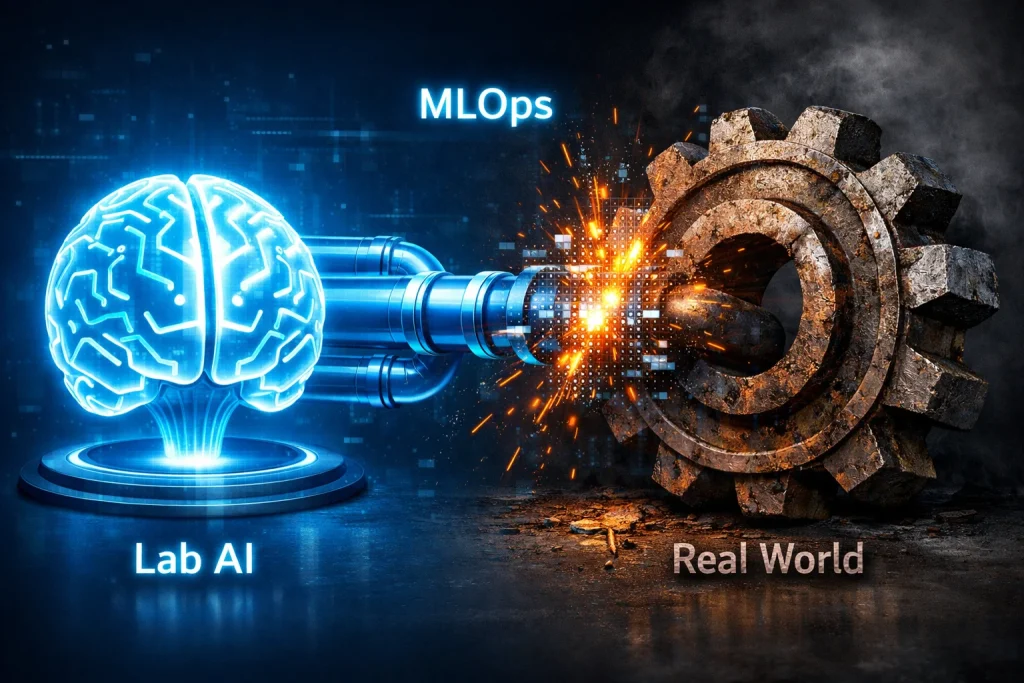
Summary: MLOps helps FMCG companies turn AI models into reliable business assets by managing deployment, monitoring, retraining, and governance. The biggest challenges include fragmented data, model drift, scalability, and integrating AI with legacy systems. Successful MLOps strategies use continuous monitoring, automated retraining, version control, explainable AI, and strong security practices. A hybrid cloud-and-edge infrastructure provides both real-time responsiveness and long-term analytics. Ultimately, MLOps ensures AI remains accurate, scalable, and valuable, enabling FMCG brands to achieve sustainable ROI from their AI investments.
AI Demand Forecasting in FMCG: Methods, Models & Real Examples
Summary: AI demand forecasting helps FMCG companies improve accuracy, reduce waste, and optimize inventory by analyzing historical sales, real-time market signals, weather, promotions, and consumer behavior. Advanced models such as XGBoost, RNNs, and Transformers identify patterns and predict demand more effectively than traditional spreadsheets. Key benefits include fewer stockouts, lower excess inventory, and better supply chain planning. Success depends on clean, connected data, explainable AI, and gradual implementation. Companies that embrace AI forecasting gain a significant competitive advantage in low-margin, fast-moving markets.
Automation 101: A Complete Guide to Workflow Automation, RPA, and Business Systems
Summary: Workflow automation, BPA, and RPA help businesses eliminate repetitive work, improve efficiency, and scale operations. BPA automates entire business processes, RPA handles tasks in legacy systems, and workflow automation connects apps and actions. Tools like Zapier and n8n make automation accessible, while strong security, governance, and human oversight ensure reliable results. The goal is simple: save time, reduce errors, and let teams focus on higher-value work.
The Ultimate Guide to AI in FMCG Industry: Trends, Use Cases & Implementation Challenges
Summary: AI is transforming the FMCG industry by improving demand forecasting, supply chain efficiency, manufacturing, customer personalization, and sustainability. From predicting consumer behaviour to reducing waste and optimizing operations, AI helps brands make faster, data-driven decisions. However, successful implementation requires overcoming challenges like poor data quality, legacy systems, and talent shortages. By starting with focused use cases, building strong data foundations, and scaling proven solutions, FMCG companies can unlock AI-driven growth and resilience.
Is Your Private Data Leaking to ChatGPT? The Hidden Risks of Shadow AI
Summary: Shadow AI occurs when employees use public AI tools without approval, potentially exposing sensitive company data, confidential information, and customer details. While these tools improve productivity, they create serious security, compliance, and privacy risks. Simply banning AI is ineffective; businesses need secure alternatives. Private AI solutions, such as RAG-based systems, allow companies to use AI capabilities while keeping internal data protected. The future of enterprise AI depends on balancing innovation with strong data security.
How AI in Healthcare Is Transforming Patient Care in 2025
Summary: AI is transforming healthcare by enabling faster diagnosis, personalized treatments, predictive care, and smarter hospital operations. From AI-powered medical imaging and drug discovery to virtual assistants and wearable monitoring, technology is helping doctors make better decisions while improving patient experiences. However, responsible AI adoption requires strong data privacy, ethical practices, and human oversight. The future of healthcare lies in combining artificial intelligence with medical expertise to create proactive, efficient, and patient-centered care.