
Real estate tokenization was expected to simplify property investment as much as stock tokenization does. The initial pilot projects boasted immediate fractional ownership, a worldwide investment pool, round-the-clock trading, property titles on the blockchain, and drastically reduced transaction fees. However, the matter has turned out to be somewhat more complicated. Mere representation of the building on the blockchain doesn’t guarantee that its ownership, trading, and investment become easier.
The token itself doesn’t alter the nature of the asset it represents. If it stands for any of the following things: ownership share, profit sharing, debt obligation, or any other form of investment, the securities laws could very well come into play. The U.S. Securities and Exchange Commission stated in January 2026 that tokenized securities are still securities, and different tokenization models result in different investors’ rights.
This fact has redefined the whole industry. The best real estate tokenization projects of 2026 are not those trying to substitute property law with blockchain. On the contrary, they use the blockchain as an infrastructure under an enforceable legal ownership scheme. The more realistic concept would look like this:
Property → Legal SPV → Investors’ Interest → Token → Permissioned Trading → Regulated Secondary Market.
What Is Real Estate Tokenization?
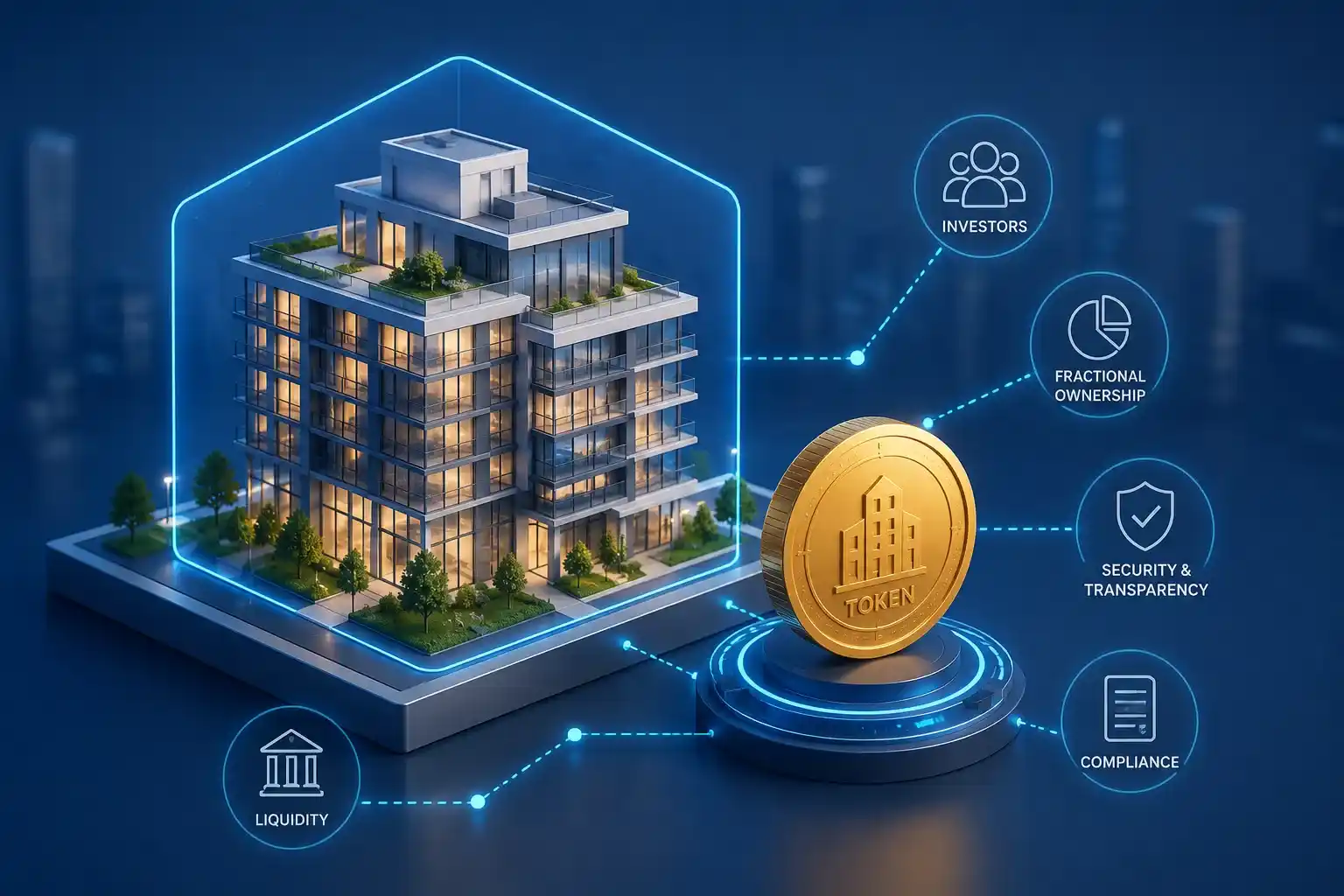
Real estate tokenization is the process of representing economic or ownership interests connected to a property through digital tokens recorded on a blockchain or distributed ledger.
A token could represent:
- An interest in an entity that owns a property
- A share of rental income
- A debt instrument secured by real estate
- A fund or investment vehicle interest
- Certain contractual rights connected to a property
The key difference between the tokenization of the property and the tokenization of an interest in the legal vehicle that holds or controls the property. As a matter of practice, investors do not get a recognized deed in digital form just by buying a token; rather, the property is owned by a legal vehicle, normally an SPV, and investors get their interests in it.
This is the reason why the fractional ownership SPV structure has gained prominence over the early “NFT deed” concept.
Why Early Real Estate Tokenization Pilots Failed?
The first tokenization experiments in the real estate sector emphasized technical aspects of tokenization, such as blockchain technology and smart contracts, while downplaying other components necessary for the successful implementation of the model. An investor can have a very well-written smart contract, an elegant investor dashboard, and thousands of tokens, yet still run into problems because of issues such as securities regulations, property ownership, KYC/AML policies, custody, taxation, and investor rights.
The problem is that these projects viewed blockchain technology as the means of increasing liquidity and simplifying property ownership. Although tokenization is associated with blockchain technology, tokenized property still requires an established property ownership structure, clearly spelled-out investor rights, regulated transfer mechanisms, and market demand for tokens.
Common failure points
| Early Tokenization Approach | What Went Wrong | Better 2026 Approach |
|---|---|---|
| Token = direct property ownership | Blockchain record may not automatically replace legally recognized land records | Connect tokens to enforceable legal ownership structures |
| Public token sale to anyone | May trigger securities and investor-protection requirements | Define investor eligibility before issuance |
| Anonymous wallets | Conflicts with KYC/AML and transfer-control requirements | Use verified, permissioned wallets where required |
| “24/7 liquidity” promise | A token is not liquid without buyers and compliant trading infrastructure | Build liquidity around an actual secondary-market mechanism |
| Blockchain title registry alone | On-chain records may not control government property registries | Integrate blockchain records with authoritative off-chain title systems |
| Unrestricted token transfers | Security restrictions can be bypassed through wallet transfers | Program transfer eligibility and restrictions |
| Smart contract as legal agreement | Code does not automatically replace contracts or statutory rights | Align legal documents, token terms, and smart-contract logic |
| Global investors from day one | Every jurisdiction can introduce different rules | Start with clearly defined jurisdictions and investor classes |
The core lesson is simple:
The blockchain is not the legal wrapper. It is the technology supporting the wrapper.
The SEC made essentially this point in 2025 when it stated that tokenization does not magically transform the nature of the underlying asset: tokenized securities remain securities.
The Model That Actually Works: Property + SPV + Compliant Token
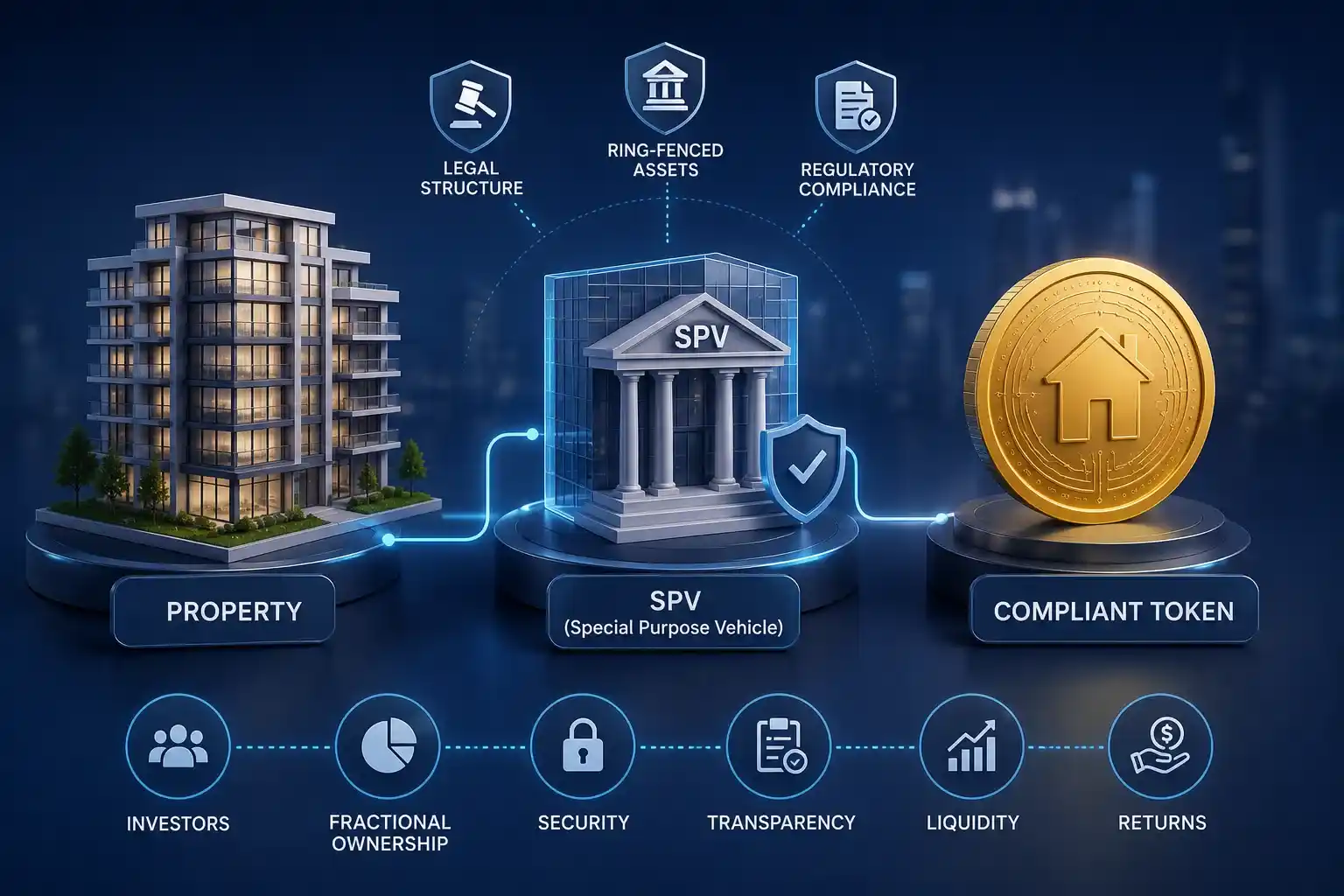
A more defensible architecture starts with the legal structure rather than the token. Imagine a commercial property valued at $10 million. Instead of creating a token that simply claims to represent “1/10,000 of the building,” the sponsor could establish an appropriate legal entity that owns the property.
Investors then acquire legally defined interests associated with that entity. The token becomes the digital representation of those interests, subject to the applicable offering, transfer, custody, and securities rules.
A simplified architecture:
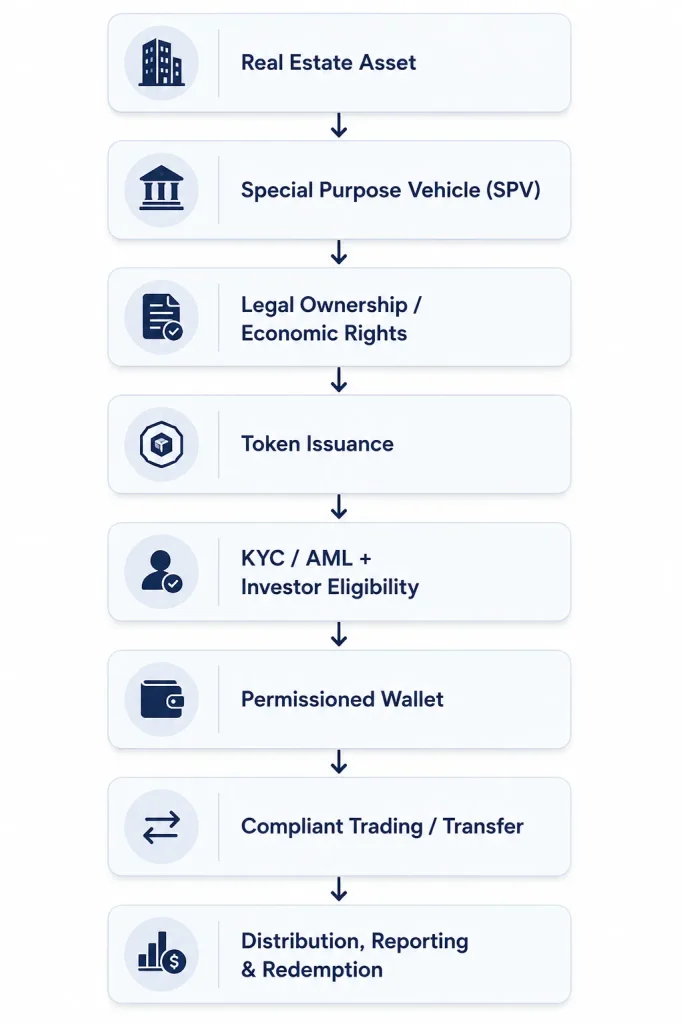
This structure creates a bridge between two worlds. The legal system determines what investors actually own.
The blockchain provides programmable infrastructure for representing, transferring, tracking, and administering those interests. For businesses evaluating a production-ready Blockchain Real Estate solution, this distinction should be part of the architecture from the beginning.
How the Fractional Ownership SPV Structure Works
An SPV is a legal entity established for a specific asset or investment strategy.
For tokenized real estate, the SPV can act as the legal bridge between the physical property and digital investors.
For example:
- A sponsor identifies a $10 million property.
- An appropriate SPV is established.
- The SPV acquires or holds the property.
- The offering documents define investor rights.
- Eligible investors purchase interests in the offering.
- Digital tokens represent those interests under the applicable structure.
- Smart contracts enforce defined transfer and operational rules.
- Rental income or other distributions are calculated and paid according to the legal terms.
- Transfers occur only when the buyer and transaction satisfy applicable requirements.
This is much more robust than claiming that a blockchain wallet address itself constitutes land ownership.
Why SPVs matter
The SPV can help separate:
- Property ownership
- Investor interests
- Sponsor operations
- Liability exposure
- Distribution mechanics
- Governance
- Reporting
The exact legal structure varies by jurisdiction, asset type, investor profile, and offering method, so the SPV should be designed with qualified legal and tax professionals rather than treated as a universal template.
Security Token Offering Compliance Is Not Optional
One of the biggest mistakes in real estate tokenization is treating compliance as something to add after the platform is built.
If a token represents an investment interest and investors expect returns from the work of the sponsor or operator, securities regulations may apply depending on the jurisdiction and structure.
In the United States, the SEC’s current materials distinguish digital securities from other crypto assets and emphasize that tokenized securities remain subject to federal securities laws.
That means a serious platform needs to think about security token offering compliance before token issuance, not after launch.
Core compliance layers
| Compliance Layer | What the Platform Needs to Address |
|---|---|
| Security classification | Determine whether the token constitutes a security or another regulated instrument |
| Offering exemption/registration | Identify the applicable legal pathway for the offering |
| Investor eligibility | Restrict participation where required |
| KYC/AML | Verify identity and screen investors |
| Transfer restrictions | Prevent unauthorized secondary transfers |
| Disclosure | Provide required offering and risk information |
| Custody | Define how tokens and investor assets are held |
| Recordkeeping | Maintain auditable ownership and transaction records |
| Tax reporting | Support relevant reporting and distribution requirements |
| Secondary trading | Ensure resale mechanisms comply with applicable laws |
The SEC has also noted that traditional securities requirements—including registration, disclosure, custody, recordkeeping, and investor-protection obligations—can continue to apply when securities are tokenized.
So the right question isn’t:
“Can we put this property on-chain?”
It is:
“What legal interest are we issuing, who can purchase it, how can it be transferred, and how can the blockchain enforce those rules?”
On-Chain Title Registry: Powerful, but Not a Magic Deed:
An on-chain title registry may be able to improve the clarity and transparency of ownership records of real estate properties. While blockchain may allow the tracking of ownership rights and transactions and other pertinent information, having such information recorded on the chain does not necessarily mean that the information will be recognized as a property title.
What makes the distinction critical is that blockchain may record the ownership information of an asset while, at the same time, the legal aspect of the ownership right may be determined through government land registers and other legal considerations. The on-chain system may track such matters as token balances, transfers of tokens, property information, encumbrances, documents, and transactions.
The most sensible strategy would be for the blockchain to serve as a synchronization mechanism to legal frameworks rather than replace them. This is especially true with international real estate properties.
Secondary Market Liquidity: The Promise Needs a Reality Check
One of the biggest selling points of real estate tokenization has always been “24/7 liquidity.” The idea sounds compelling: tokenize a property, divide it into smaller investment interests, and let investors trade those interests whenever they want. But there is an important reality check, tokenization can make an asset easier to transfer, but it cannot create a market where one does not exist. A token may be available for trading and still be difficult to sell.
Real secondary market liquidity depends on several factors working together:
- Active buyers and sellers willing to trade
- Reliable price discovery based on credible property and market data
- Legal transferability of the underlying investment interest
- Regulatory permissions and investor eligibility requirements
- Secure custody and settlement infrastructure
- Accurate property and financial information
- Sufficient market demand or professional market makers
This is where the distinction between the primary market and secondary market becomes important. In the primary market, an investor purchases a tokenized interest directly from the issuer or sponsor. In the secondary market, that investor attempts to sell the interest to another eligible investor. The second transaction introduces additional questions around transfer restrictions, compliance, custody, pricing, and regulated trading infrastructure.
So, instead of promising “tokenized property = instant liquidity,” a more realistic proposition is:
Tokenization can make compliant ownership transfers and settlement more programmable and efficient, but actual liquidity depends on market structure, regulatory requirements, investor participation, and genuine demand.
That distinction separates a credible real estate tokenization platform from a project simply selling the next version of the tokenization hype.
What Regulators Are Likely to Shut Down?
The phrase “shut down” should not be interpreted as a prediction about a particular project or regulator. The more useful question is which design patterns create obvious regulatory problems.
Several models should immediately raise red flags.
1. Selling investment tokens while pretending they are utility tokens
Changing the terminology does not necessarily change the economic substance. If buyers invest money expecting returns generated through the sponsor’s efforts, the legal analysis does not end because the platform calls the asset a “utility token.”
The SEC’s digital-asset guidance has historically emphasized looking at the transaction and surrounding circumstances rather than merely the label applied to a token.
2. Promising guaranteed appreciation
A property token is still exposed to:
- Property-market risk
- Vacancy
- Interest rates
- Maintenance costs
- Financing risk
- Tenant risk
- Regulatory changes
- Valuation uncertainty
Marketing guaranteed returns can create serious investor-protection concerns.
3. Allowing Unrestricted Token Transfers
A digital token cannot automatically be transferred to anyone with a crypto wallet. If the underlying investment has securities, investor eligibility, or jurisdictional restrictions, unrestricted transfers can create serious compliance problems. A compliant platform should build eligibility checks into every transfer.
4. Treating a Blockchain Record as Legal Title
Blockchain can provide a transparent and tamper-resistant ownership record, but it does not automatically replace a government-recognized property title. The on-chain title registry should work alongside existing land and property records rather than being treated as a legal substitute.
5. Launching the Marketplace Before Defining the Legal Asset
Building the marketplace first and deciding what investors legally own later is the wrong approach. The asset, ownership rights, and regulatory framework should come first.
Legal Structure → Compliance → Token Design → Marketplace
This approach creates a stronger foundation for scalable and compliant real estate tokenization.
The 2026 Architecture for a Real Estate Tokenization Platform
A production-grade real estate tokenization platform needs several interconnected layers.
Layer 1: Property and legal layer
This includes:
- Property ownership documents
- SPV documentation
- Offering agreements
- Investor rights
- Distribution rules
- Jurisdictional restrictions
- Tax considerations
Layer 2: Investor onboarding
The platform should support:
- Identity verification
- KYC
- AML screening
- Accreditation or eligibility checks where applicable
- Investor suitability workflows where required
- Wallet verification
Layer 3: Tokenization engine
The tokenization layer manages:
- Token issuance
- Supply
- Ownership balances
- Transfer rules
- Corporate actions
- Distribution events
- Redemption or burn mechanics
Layer 4: Compliance engine
This is one of the most important components. The compliance engine can determine:
Can Investor A transfer Token X to Investor B?
The answer may depend on:
- Investor jurisdiction
- Investor status
- Holding period
- Offering exemption
- Transfer restrictions
- Sanctions status
- KYC status
- Asset-specific rules
Layer 5: Marketplace
The marketplace handles:
- Listings
- Orders
- Pricing
- Matching
- Settlement
- Investor eligibility
- Transaction records
It should not simply behave like an unrestricted crypto exchange.
Layer 6: Property data and reporting
Investors need visibility into:
- Property valuation
- Occupancy
- Rental income
- Expenses
- Debt
- Distributions
- Property events
- Token ownership
Layer 7: Audit and governance
Every important action should have an auditable trail.
This includes:
- Token issuance
- Administrative changes
- Investor onboarding
- Transfers
- Distributions
- Compliance overrides
- Contract upgrades
- Corporate actions
What the Technology Stack Should Look Like?
The technology should serve the legal and financial architecture not the other way around.
A practical platform may include:
| Component | Role |
|---|---|
| Blockchain / DLT | Ownership and transaction record |
| Smart contracts | Token rules and programmable transfers |
| Permissioned wallet layer | Investor-controlled digital assets |
| KYC/AML provider | Identity and compliance verification |
| SPV/legal system | Underlying ownership and contractual rights |
| Property management system | Rental, occupancy, maintenance and operational data |
| Custody infrastructure | Secure asset holding where required |
| Payment rails | Fiat, stablecoin or other approved settlement mechanisms |
| Investor portal | Portfolio, documents and reporting |
| Compliance engine | Eligibility and transfer validation |
| Analytics layer | Valuation, performance and liquidity insights |
| Audit layer | Immutable or tamper-evident event records |
The key is interoperability.
A tokenization platform should not become another isolated database that happens to use blockchain.
Where AI Can Make Tokenized Real Estate More Useful?
Blockchain provides the trusted record, but AI can turn that data into actionable intelligence. As tokenized real estate portfolios become larger and more complex, AI can help investors, property managers, and operators understand what is happening across assets without relying entirely on manual analysis.
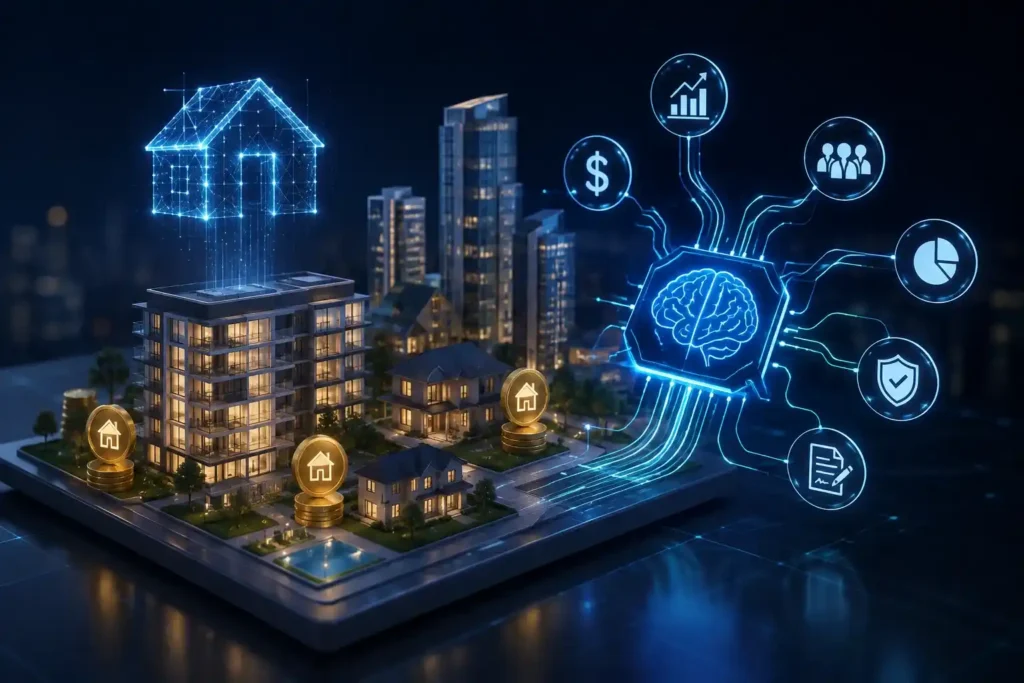
AI can support tokenized real estate through:
- Document analysis: Extract key information from leases, contracts, valuations, and property documents.
- Lease monitoring: Identify renewal dates, rent changes, and important contractual obligations.
- Risk detection: Flag unusual financial activity, tenant risks, or potential property issues.
- Portfolio analytics: Compare asset performance, rental income, occupancy, and expenses across properties.
- Fraud and anomaly detection: Identify unusual transactions or patterns that require further investigation.
- Investor reporting: Automate performance summaries, distributions, and portfolio updates.
Imagine a platform that automatically reads lease agreements, extracts upcoming renewal dates, monitors occupancy, compares rental performance with market benchmarks, and flags unusual transactions. That provides considerably more value than simply displaying a token balance.
Together, blockchain and AI can turn tokenization into an intelligent real estate operating layer—combining transparent ownership records with automated analysis and decision support. For businesses exploring this approach, Blockchain Real Estate solutions can connect blockchain infrastructure with automation, analytics, and property operations rather than treating blockchain as a standalone technology.
What Actually Works vs. What Doesn’t
| Works in 2026 | Increasingly Difficult to Defend |
|---|---|
| SPV-backed tokenization | “Token = property deed” without legal recognition |
| Permissioned transfers | Anonymous unrestricted investment |
| KYC/AML integrated into onboarding | Compliance added after launch |
| Clearly defined investor rights | Vague promises of “fractional ownership” |
| Regulated secondary-market strategy | Guaranteed instant liquidity |
| Blockchain as supporting infrastructure | Blockchain presented as a replacement for property law |
| Auditable ownership records | Unverified off-chain claims |
| Jurisdiction-specific compliance | One global token model for every market |
| Smart-contract transfer controls | Open wallet-to-wallet transfers regardless of eligibility |
| Institutional-grade custody | Informal self-custody assumptions |
The Regulatory Direction Is Clearer Than the Hype Suggests
Regulation is not necessarily slowing down real estate tokenization; in many ways, it is pushing the industry toward more credible and sustainable models. In January 2026, the U.S. Securities and Exchange Commission (SEC) provided further clarity around tokenized securities, recognizing that securities can be represented through crypto assets and that ownership records may be maintained partly or entirely through blockchain-based networks.
However, tokenization does not remove traditional securities-law obligations. The SEC has emphasized that the legal requirements associated with securities can continue to apply even when ownership or transaction records are maintained on-chain. This makes compliance, investor eligibility, disclosures, custody, and transfer restrictions essential considerations when designing a security token offering compliance framework.
Europe is taking a similarly structured approach. Under the European Securities and Markets Authority (ESMA)’s MiCA framework, different types of crypto-assets and distributed ledger technology (DLT) applications are subject to specific definitions and regulatory requirements. For real estate businesses, the key takeaway is not that every tokenized property should follow the same regulatory model. The structure should instead be designed around the legal nature of the investment, the jurisdiction, the investor profile, and how the token will be issued and transferred.
Final Takeaway
Real estate tokenization in 2026 is moving beyond hype toward practical, regulated infrastructure. The strongest models combine legally sound ownership structures, compliant investor onboarding, programmable blockchain technology, and controlled secondary-market access. Tokenization can make fractional ownership more accessible, streamline administration, improve transparency, and simplify eligible asset transfers, but blockchain cannot replace property law or regulatory obligations. The real opportunity lies in building secure, compliant, and scalable infrastructure that connects traditional real estate ownership with modern digital investment systems.