Why Cloud Computing is the Secret to Modern Retail Growth

By Techelix editorial team

A global group of technologists, strategists, and creatives bringing the latest insights in AI, technology, healthcare, fintech, and more to shape the future of industries.

Contents

What Does “The Cloud” Actually Mean for Your Store?


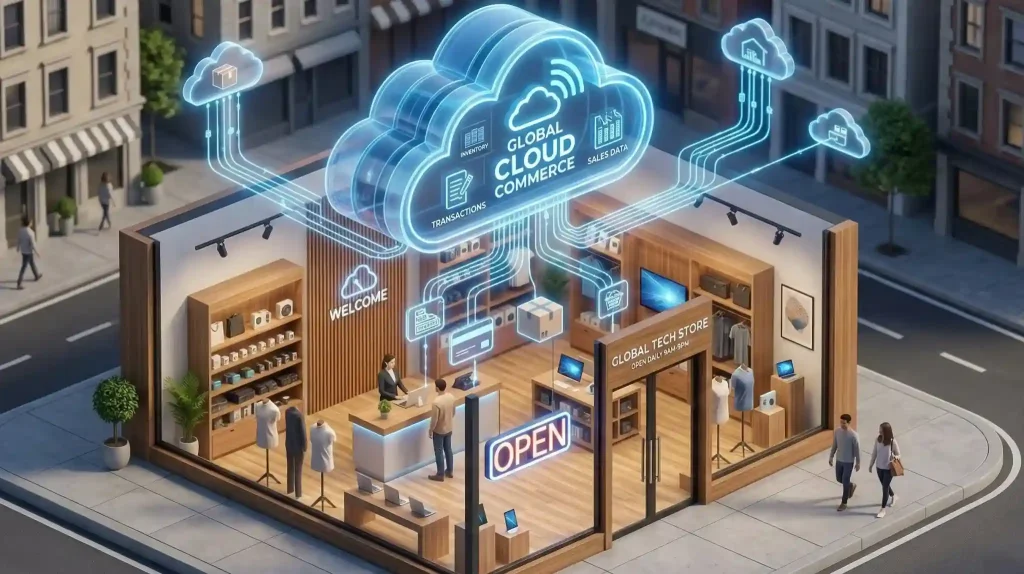
A realistic 3D render of a modern retail store at night with a glowing "Open" sign and digital blue light lines connecting the physical shop to a sleek cloud icon above, representing cloud computing for retail businesses.Every second counts when a customer is ready to buy. In 2026, if your website takes more than three seconds to load or your in-store system lags during a busy holiday rush, you aren’t just losing a sale—you are losing a customer for life. Old-fashioned servers tucked away in a back room simply can’t keep up with the modern shopper who expects everything to be instant.

Moving to the cloud means your “checkout” never sleeps. Whether you have ten customers or ten thousand hitting your site at once, the cloud ensures your system stays fast and reliable. It’s the difference between a store that struggles to keep up and one that is built to grow.

See how Techelix handles Cloud Migration for growing brands.


What Does “The Cloud” Actually Mean for Your Store?


Let’s skip the technical jargon. For a retail owner, the cloud is essentially a massive, high-speed engine for your business that you rent instead of own. Instead of buying expensive hardware that sits in your office and gets old, you use the most advanced technology in the world through the internet.

This levels the playing field. It gives a local boutique the same digital power and speed as a global giant. Because the cloud is “off-site,” you don’t have to worry about maintaining servers or fixing hardware; you just focus on selling your products while the tech takes care of itself in the background.


Benefit #1: Scalability (Pay Only for What You Need)


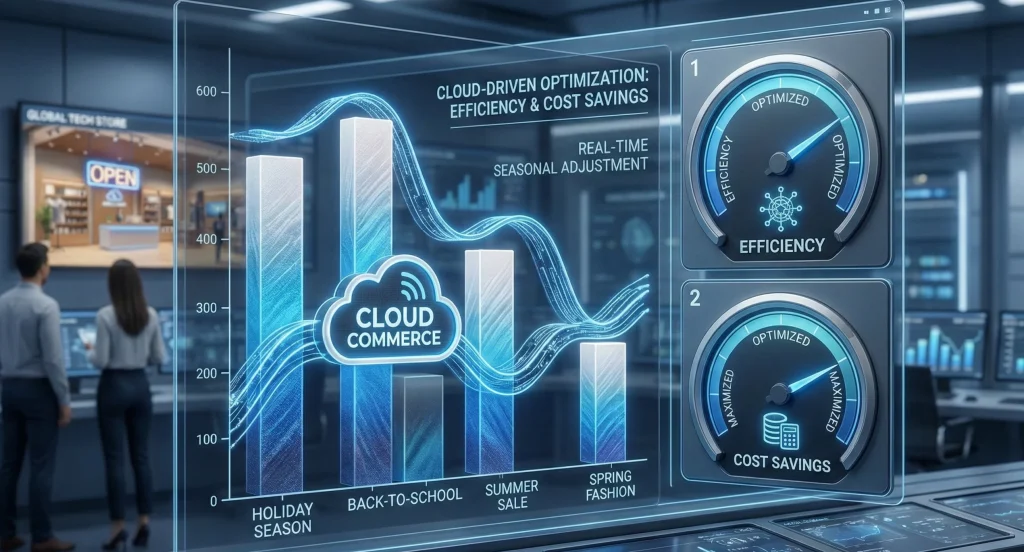
A professional 3D render of a digital data dashboard featuring a bar graph with shopping seasons like "Holiday Season" and "Back-to-School." A glowing blue cloud line tracks the data perfectly, symbolizing efficiency and cost savings through cloud commerce analytics.One of the biggest headaches in the retail industry is the unpredictable “Up and Down” of shopping seasons. A traditional retail setup is like owning a building that is ten stories high, even though you only use the ground floor for 11 months of the year. You are stuck paying the “rent” (the electricity, maintenance, and hardware costs) for all ten floors just because you might need them for the December holiday rush.

The cloud completely changes this financial model with something called Elasticity. It acts like an accordion: it automatically expands to handle a massive Black Friday rush or a viral social media sale so your site never crashes, and it shrinks back down in the quiet off-season so you aren’t paying for empty digital space.

This shift is a game-changer for your bottom line. Instead of a giant, scary upfront cost for servers that will be obsolete in three years, you move to an “Operating Expense” model. You pay a manageable monthly fee that scales alongside your success. In 2026, this means you can reinvest that saved “hardware money” back into what really matters—your inventory, your marketing, and your team.
 

Benefit #2: Real-Time Everything (Inventory and Store Sync)


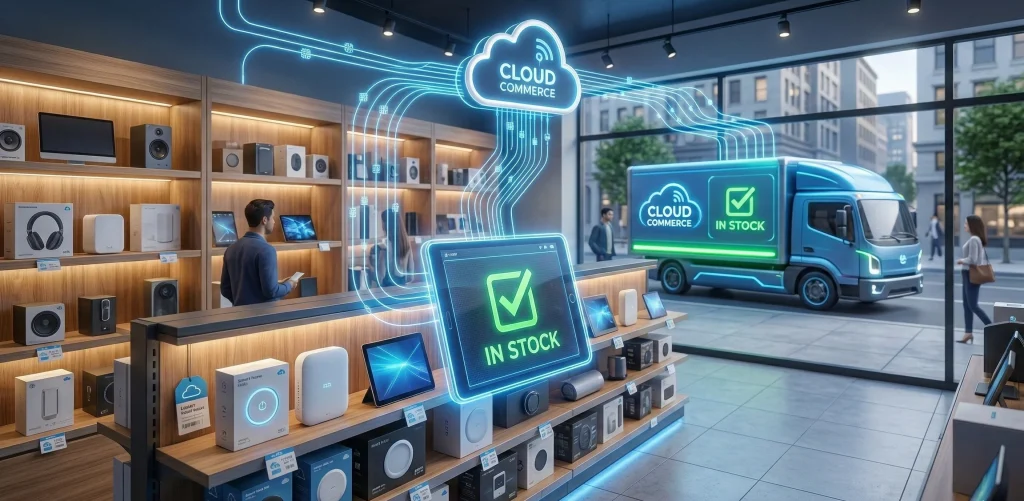
A high-resolution, detailed 3D professional render of a modern retail store aisle stocked with electronics. A digital tablet floats in front of a shelf, displaying a prominent green "In Stock" icon with a checkmark. Glowing blue data pathways connect the floating tablet to a larger, central "Cloud Commerce" icon above and extend outwards towards a delivery truck visible outside the window, which features a matching green "IN STOCK" checkmark symbol and livery, representing efficient, high-tech stock management.One of the biggest frustrations in retail is the “out-of-stock” surprise—where a customer sees an item online, drives to the store, and finds the shelf empty. Cloud-based inventory management solves this by synchronizing your data instantly across every sales channel.

  • Unified Inventory Visibility: Moving to the cloud ensures that your website, mobile app, and physical store all reflect the exact same stock levels in real-time.

  • Seamless BOPIS (Buy Online, Pick Up In-Store): Cloud-native platforms are essential for modern fulfillment strategies like click-and-collect, which is expected to account for 11% of all U.S. e-commerce sales by 2026.

  • Automated Restocking: Cloud systems can automatically trigger reorders from suppliers as soon as stock dips below a certain level, preventing missed sales and reducing manual paperwork.

  • Silo Removal: By centralizing data storage and processing, retailers can eliminate “data silos” where different departments are working from outdated information.
 

Benefit #3: Keeping Customer Data Safe and Accessible


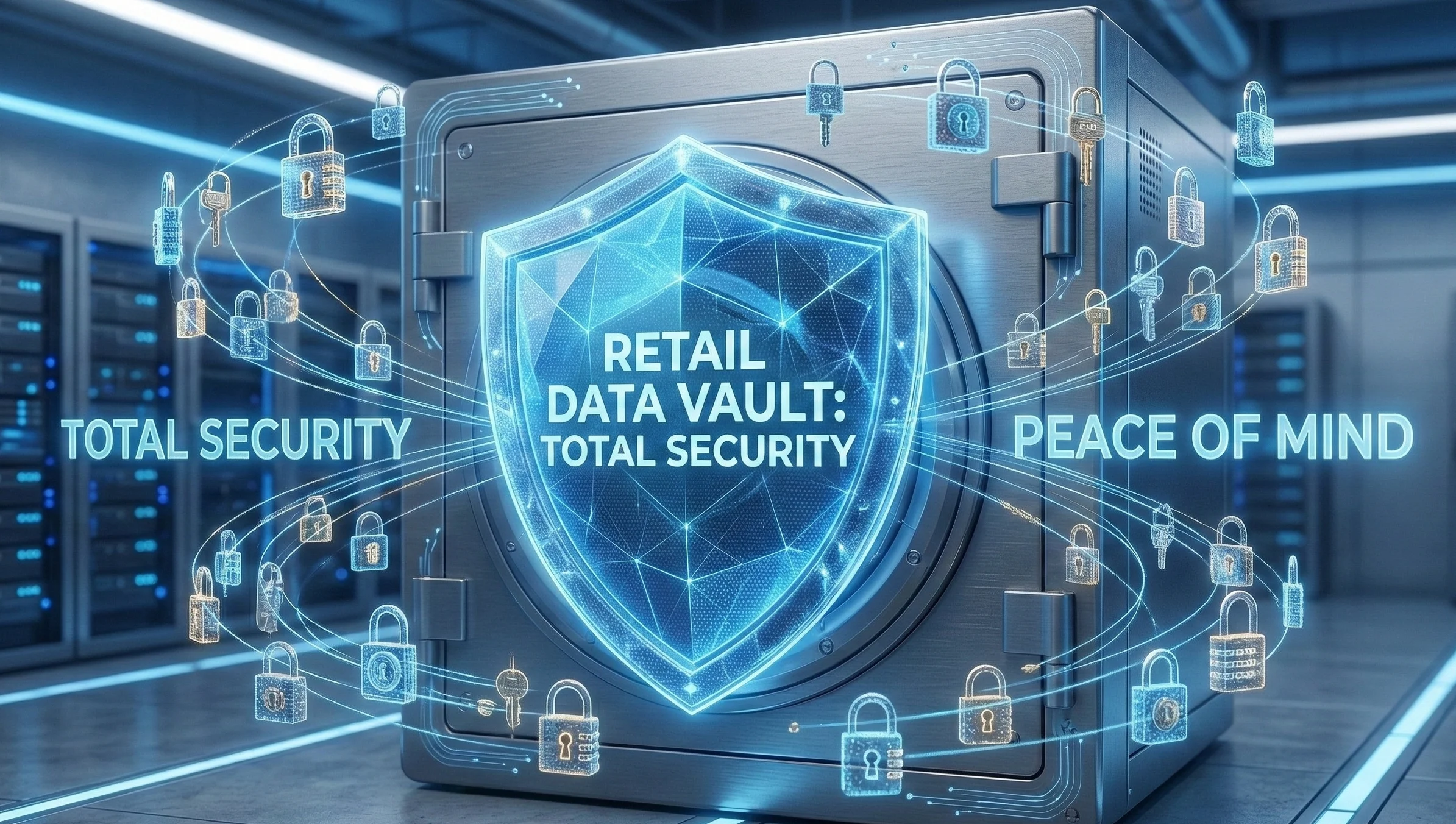
A professional 3D visual of a large, metallic digital vault in a server room. A glowing blue holographic shield protects the vault, featuring the text "RETAIL DATA VAULT: TOTAL SECURITY." Tiny, shimmering digital padlocks float in an orbital path around the shield, symbolizing total security and peace of mind for retail data.Many retailers worry that moving to the cloud makes them vulnerable, but in reality, reputable cloud providers offer a level of security that most small-to-medium businesses could never afford on their own.

  • Advanced Protection: Top providers invest heavily in encryption for data at rest and in transit, continuous monitoring, and real-time threat detection powered by AI.

  • Disaster Recovery: Storing your sales and customer records in the cloud provides built-in redundancy across geographically distributed data centers. This ensures that even if a physical store location loses power or faces an emergency, your business data remains safe and retrievable in hours rather than days.

  • Zero Trust Architecture: Modern cloud environments can implement “Zero Trust” security, where every user and device must be verified before gaining access to sensitive financial or personal data.

  • Automatic Compliance: Leading cloud platforms often maintain compliance with rigorous standards like GDPR or SOC 2, helping you meet legal requirements for data privacy without extra manual effort.

 

How to Start: The 3-Step Move to the Cloud


Transitioning your retail shop doesn’t have to happen all at once. In 2026, a phased approach is the safest way to ensure your business stays operational during the move.

  1. The Readiness Audit: Start by taking stock of your existing hardware, software, and internet speed. Identify which systems are high-impact—like your Point of Sale (POS)—and prioritize them for the first wave of migration.

  2. Choose Your Cloud Partner: Pick a provider that fits your scale and offers specific retail features, such as built-in inventory sync or mobile fulfillment tools. Ensure they offer a “pay-as-you-go” model so your costs grow only as your business does.

  3. Training and Optimization: Once the move is made, invest in hands-on workshops for your staff to get them comfortable with the new tools. Use cloud-native features like auto-scaling to ensure you are always getting the most value for your investment.


Why 2026 is the Year of “Invisible” Retail Tech


The biggest trend we are seeing this year is that technology in stores is becoming “invisible.” Shoppers don’t want to see the servers or the wires; they just want the results. They want to walk into a store, have the app recognize them, and have their “online favorites” waiting for them in a fitting room.

This level of “Ambient Intelligence” is only possible because of the cloud. By moving your infrastructure off-site, you free up physical space in your store and mental space for your team. You stop being an “IT Manager” and go back to being a “Retailer.” The cloud handles the heavy lifting of data processing, security, and updates, while you focus on the human side of your brand—customer service, curation, and community.


You Want to Use AI, but You’re Afraid of “Hallucinations”


Cloud computing is no longer a luxury for the “big players.” It is the essential foundation for any retail brand that wants to survive past 2026. The stores that win are the ones that make shopping easy, fast, and secure.

By moving your store into a cloud-native environment, you aren’t just buying new software; you are choosing a system that scales as you grow. Whether you are opening your second location or your fiftieth, the cloud ensures your tech stays out of your way and your business stays ahead of the curve.

Ready to future-proof your store?

Build custom AI solutions that deliver real business value

From strategy to deployment, we help you design, develop, and scale AI-powered software that solves complex problems and drives measurable outcomes.

Facebook
Twitter
LinkedIn

Recent Post

Your journey to innovation starts here

Let’s bring your vision to life with our expertise in AI and custom development. Reach out to us to discuss your project today!