Let’s be honest—when you think about insurance, words like ‘fast,’ ‘simple,’ or ‘personal’ probably aren’t the first ones that come to mind. For most of us, it’s been a world of endless paperwork, confusing jargon, and waiting… a lot of waiting. It often felt like you were just a number in a giant, complicated system.
But what if that’s finally changing? Behind the scenes, a massive shift is happening, and it’s being driven by one of the most powerful technologies of our time: Artificial Intelligence (AI).
Think of it this way: developers are starting to talk about “vibe coding,” where they work alongside AI to build things more creatively and intuitively. The insurance industry is heading in a similar direction. The old, rigid rulebooks are being set aside for a smarter, more flexible approach that actually focuses on the customer. Instead of just drowning in piles of data, companies are using AI to understand what that data actually means—helping them move from simply paying out claims after a disaster to proactively helping you avoid it in the first place.
And this isn’t about robots taking over. It’s about letting technology handle the boring, repetitive stuff so that the human experts can focus on what really matters: solving complex problems, offering real guidance, and building a service that feels less like a policy and more like a partnership. In short, AI is helping make insurance smarter, faster, and a whole lot more human.
Why the Insurance Industry is Embracing Artificial Intelligence?
So, why is the entire insurance world suddenly buzzing about AI? It’s not just about looking modern or chasing the latest tech trend. It really comes down to us. In every other part of our lives, we’ve gotten used to getting what we need with a few taps on a screen—whether it’s dinner, a movie, or a ride. We expect things to be fast, simple, and built around us. The old way of doing insurance, with its mountains of paperwork and frustrating wait times, just feels completely out of date now.
For insurance companies, this has become a sink-or-swim moment. Adopting AI to deliver a smarter and more personal experience isn’t just a cool new feature; it’s the only way to stay in the game. That’s why everyone, from the oldest industry giants to the newest startups, is in a race to see how this technology can solve problems that have been around forever. The question isn’t if things will change anymore—it’s about how much better the entire experience is about to get.
7 Use Cases for AI in Insurance in Practice
So, how is AI actually making a difference in the real world of insurance? It’s not just theory—these are practical tools being used right now to solve some of the industry’s biggest headaches. Let’s break down the seven most important ways AI is getting the job done.
Accelerating Claims with AI-Powered Automation
 Filing an insurance claim has never been a quick job. It’s a process that has always involved a lot of paperwork and a long wait for someone to manually review everything. For the person making the claim, this often meant being left in the dark for weeks, unsure of what was happening.
AI is now streamlining that entire experience. Instead of waiting, you can often just upload a few photos of the damage, and the system can analyze the issue, check your policy, and approve the claim in minutes. It’s a major step forward—research from McKinsey shows this technology can cut claim costs by 30%. For you, this simply means getting things sorted out much faster and with a lot less trouble.
Smarter Underwriting and Risk Analysis with AI
 In the past, getting an insurance policy meant being placed into a very broad category. Insurers would look at a few general details and assign you a risk level that might not have accurately reflected your individual situation, which didn’t always lead to fair pricing.
AI allows for a much more precise and personalized approach to underwriting. By analyzing a wider range of data points, it can create a risk profile that is specific to you. This leads to fairer pricing and, according to industry analysis, can help underwriters spend up to 40% less time on manual work, allowing them to focus on more complex cases.
Enhancing Fraud Detection with AI Analytics
 Insurance fraud is a massive issue that quietly drives up costs for all customers. For investigators, trying to find fraudulent claims among millions of legitimate ones has always been an incredibly difficult and time-consuming task.
AI acts as a powerful tool for detecting fraud. It can analyze vast amounts of claim data in real-time to spot suspicious patterns that a human would likely miss. Considering that fraud costs consumers at least $308.6 billion a year according to a study conducted for Coalition Against Insurance Fraud, using AI to catch it early is a critical way to help keep premiums fair for everyone.
AI-Driven Personalization and Dynamic Pricing
 For a long time, most insurance products were “one-size-fits-all.” The policy you were offered was generally the same as everyone else’s and didn’t really adapt to your specific lifestyle or how you actually behaved.
Now, AI is making it possible to create insurance products that are tailored to the individual. For example, usage-based car insurance can reward safer drivers with lower premiums. This isn’t just a niche idea; a 2023 CI&T survey indicated that 58% of customers believe sharing personal data is necessary for a personalized experience, while 87% want to be asked for permission before retailers collect their data.
AI Virtual Agents for 24/7 Customer Support
 Getting a simple question answered by an insurer often meant you were tied to their 9-to-5 business hours. If an issue came up on a weekend or late at night, you usually had to wait to get the help you needed.
AI-powered virtual agents and chatbots have solved this problem by providing 24/7 support. They can handle routine requests like policy questions or information updates at any time, day or night. This trend is becoming standard practice; Gartner predicts that by 2026, one in every ten agent interactions will be fully automated, making support far more accessible.
Predictive Analysis for Proactive Customer Retention
 Insurers have traditionally operated in a reactive way when it comes to customer loyalty. They often wouldn’t know a customer was unhappy or planning to switch until after they had already made the decision to leave.
AI allows companies to be much more proactive. By analyzing customer data, it can predict who might be at risk of leaving and why. This gives the insurer a chance to reach out with better offers or solutions before the customer is lost. This level of personalization, according to McKinsey, can lift revenues by 5 to 15%, proving that a proactive approach builds better, longer-lasting customer relationships.
Streamlining Compliance and Documentation with AI
 It’s no secret that the insurance world has always been built on mountains of paperwork. For any company, managing these documents and making sure everything follows the complex rules has been a huge, time-consuming job that often leads to simple human mistakes.
This is an area where AI is a huge help. It can take on the heavy lifting of reading and organizing these documents, pulling out the important information automatically. The impact is significant—industry reports show that this kind of smart processing can cut down the manual work needed by up to 70%. This frees up the human team to focus on more important tasks and seriously reduces costly errors.
The Benefits of AI in Insurance for Companies and Customers
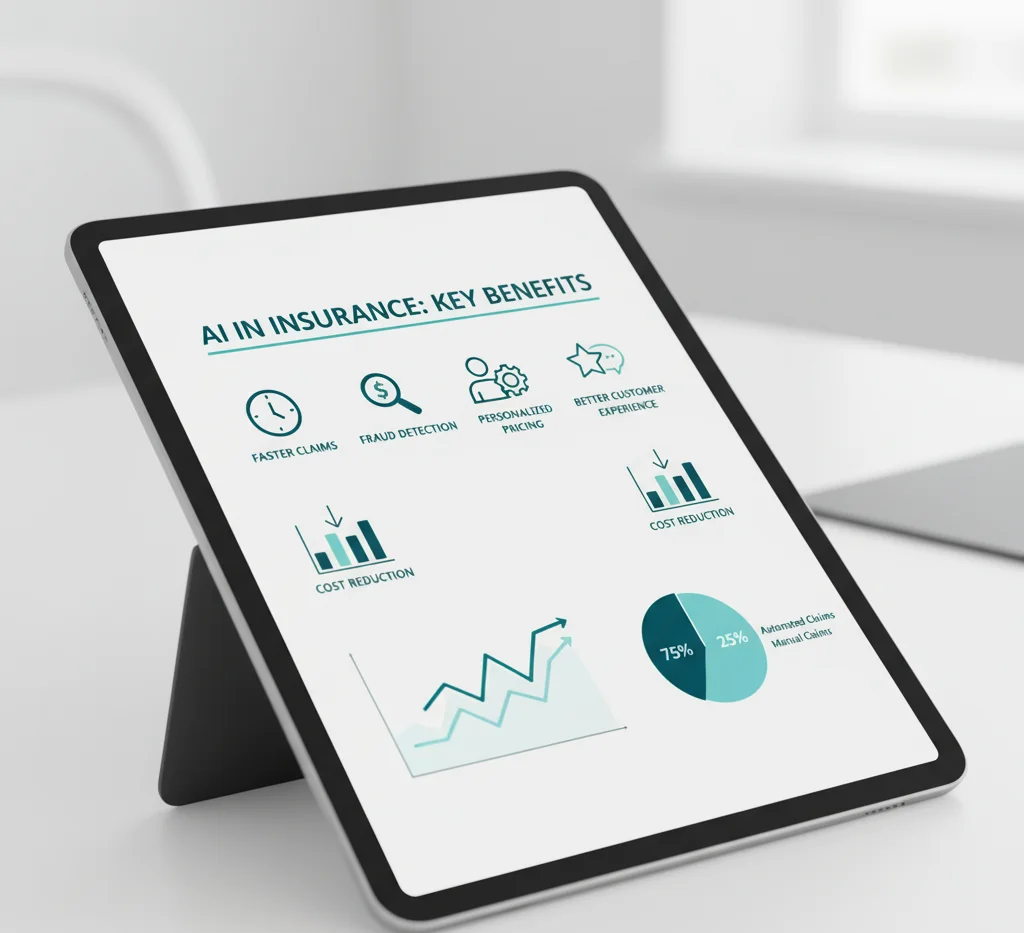
AI is changing how insurance really works behind the scenes. It helps teams handle claims faster, spot mistakes before they happen, and understand risks more clearly. Instead of spending hours on paperwork and reviews, insurers can focus on people and decisions that matter. It saves time, reduces costs, and makes every step smoother.
For customers, this change is easy to feel. Policies are fairer, claims get processed quicker, and support feels more personal. It is no longer just about getting covered but about being cared for in the right way. AI is helping insurance become simpler, more transparent, and far more dependable.
Challenges and Ethical Considerations
Bringing AI into insurance also means taking responsibility for how it’s used. Since it often relies on sensitive customer information, protecting privacy and using data fairly is essential. Every system needs to be designed with trust, security, and transparency in mind from the very beginning.
AI can analyze data and find patterns, but it still needs people to guide it. Human judgment gives meaning to the numbers and ensures decisions stay fair and thoughtful. The best outcomes happen when technology does the heavy lifting and people focus on understanding, empathy, and doing what’s right for customers.
The Future of AI in Insurance
The future of insurance is becoming both smarter and more human. AI is helping companies move from reacting to problems to preventing them before they occur. It turns data into meaningful insights that allow insurers to protect people with more accuracy and care. Imagine a policy that adjusts to your lifestyle or a system that warns you about a possible issue before it happens — that future is already taking shape.
Through our AI Ops Services and ongoing work in the insurance industry, we help insurers turn this vision into reality. Our focus is on creating intelligent solutions that make everyday operations faster, safer, and more personal, so technology becomes something that supports people, not replaces them.