

The 2026 Energy Crisis: Why Factories are Going Digital
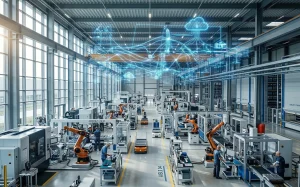 Most people think of factories as places with smokestacks and loud machines, but in 2026, they are actually massive data hubs. Every sensor on the floor, every robotic arm, and every digital twin is constantly sending data to the cloud. Here’s the thing: all that data uses a ton of electricity. The digital side of a manufacturing business can now account for a huge chunk of its total carbon footprint.
And it’s not just about being “green” anymore. Governments are getting serious. Starting in 2026, new rules like the EU’s Carbon Border Adjustment Mechanism (CBAM) mean that if you can’t prove your products were made efficiently, you’ll be hit with heavy taxes just to cross the border. A “wasteful” server sitting in your office is now just as expensive as a leaky steam pipe on the factory floor.
What is GreenOps? (It’s FinOps with a Conscience)
So, what do we do about it? We use GreenOps. Think of it as the partner to FinOps—where FinOps looks at your cloud bill, GreenOps looks at your carbon footprint.
The best part is that they usually point to the same problem: “Zombie” servers. These are digital resources that you are paying for every month but aren’t actually using. By cleaning up these digital leftovers, we’ve seen manufacturers cut their cloud costs and their emissions by 25% to 40% in one go.
Explore our DevOps Consulting to see how we optimize cloud infrastructure.
AIOps: The "Brain" of the Sustainable Factory
In 2026, we don’t expect a human to sit around and watch server dials all day. We use AIOps—AI that handles the “operations” of your tech.
Self-Healing Systems: If the AI detects that a production line is down for the weekend, it automatically puts the connected cloud servers into a “sleep mode” to save power.
Noise Reduction: Instead of 1,000 alerts hitting your phone, the AI filters out the junk and only tells you when a machine is actually wasting energy.
Real-Time Adjustments: It can even shift heavy data processing tasks to “green hours” when your local grid is powered by wind or solar, which is often cheaper and cleaner.
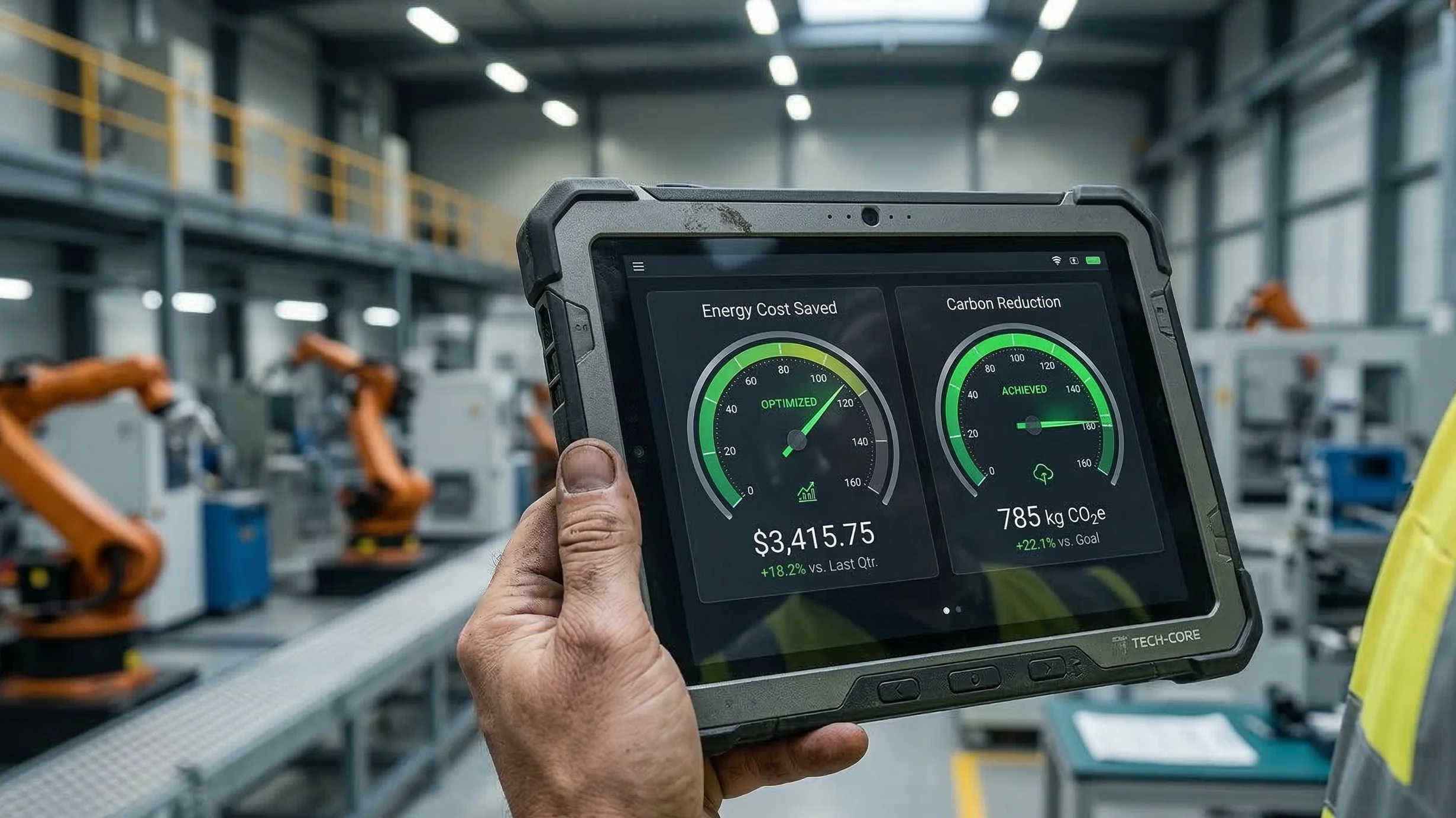
The Hidden Impact: Writing "Clean" Code for Greener Hardware
When we talk about saving energy in a factory, we usually look at the big machines. But in 2026, we have to look at the code running them too. Here’s the thing: inefficient software is a massive energy hog. If a piece of code is written poorly, it forces the processor to work harder, which pulls more power and generates more heat.
At Techelix, we practice Sustainable Software Development. This isn’t just a buzzword; it’s about writing “lean” code that uses fewer CPU cycles to get the same result.
Reducing Data Weight: Every megabyte of data moved across a network has a carbon cost. By optimizing how your factory apps handle data—like using “Edge Computing” to process info locally instead of sending everything to a distant cloud—we cut that energy drain significantly.
Language Matters: Some programming languages are simply more efficient than others. For example, moving certain “heavy” background tasks from older frameworks to more modern, compiled languages can reduce energy consumption by up to 50% for that specific task.
Green APIs: We build “carbon-aware” APIs that can actually check the local power grid’s status. If the grid is currently relying on coal, the software can delay non-essential updates or heavy backups until the wind picks up and the grid turns “green”.
This approach turns your software from a “hidden cost” into a tool for efficiency. It’s not just about the hardware; it’s about making sure the “brain” of your factory is running as cleanly as possible.
Check out our Custom Software Development to see how we build efficient, modern apps.
Sustainable Architecture: Building for the Future
If you are still running your own servers in a closet at the factory, you are likely burning money. In 2026, the data shows that cloud data centers are up to 5 times more energy-efficient than traditional on-premise setups.
Moving to a modern Cloud Migration strategy can reduce your digital carbon impact by up to 80%. Large providers (like AWS or Azure) operate at a scale that allows them to invest in things a single factory can’t—like direct-to-chip liquid cooling and 100% renewable energy contracts.
But here is the thing: you can’t just “lift and shift” your old, messy software and expect it to be green. We focus on Cloud-Native Modernization. This means breaking down old, “heavy” applications into smaller containers that only turn on when they are needed. It’s the difference between leaving a whole building’s lights on all night versus having motion sensors in every room.
Compliance: Making Sustainability Profitable
The boardroom cares about two things in 2026: profit and staying out of legal trouble. GreenOps gives you the data to satisfy both.
With new rules like the Corporate Sustainability Reporting Directive (CSRD), manufacturers now have to prove their environmental impact with real data, not just vague promises.
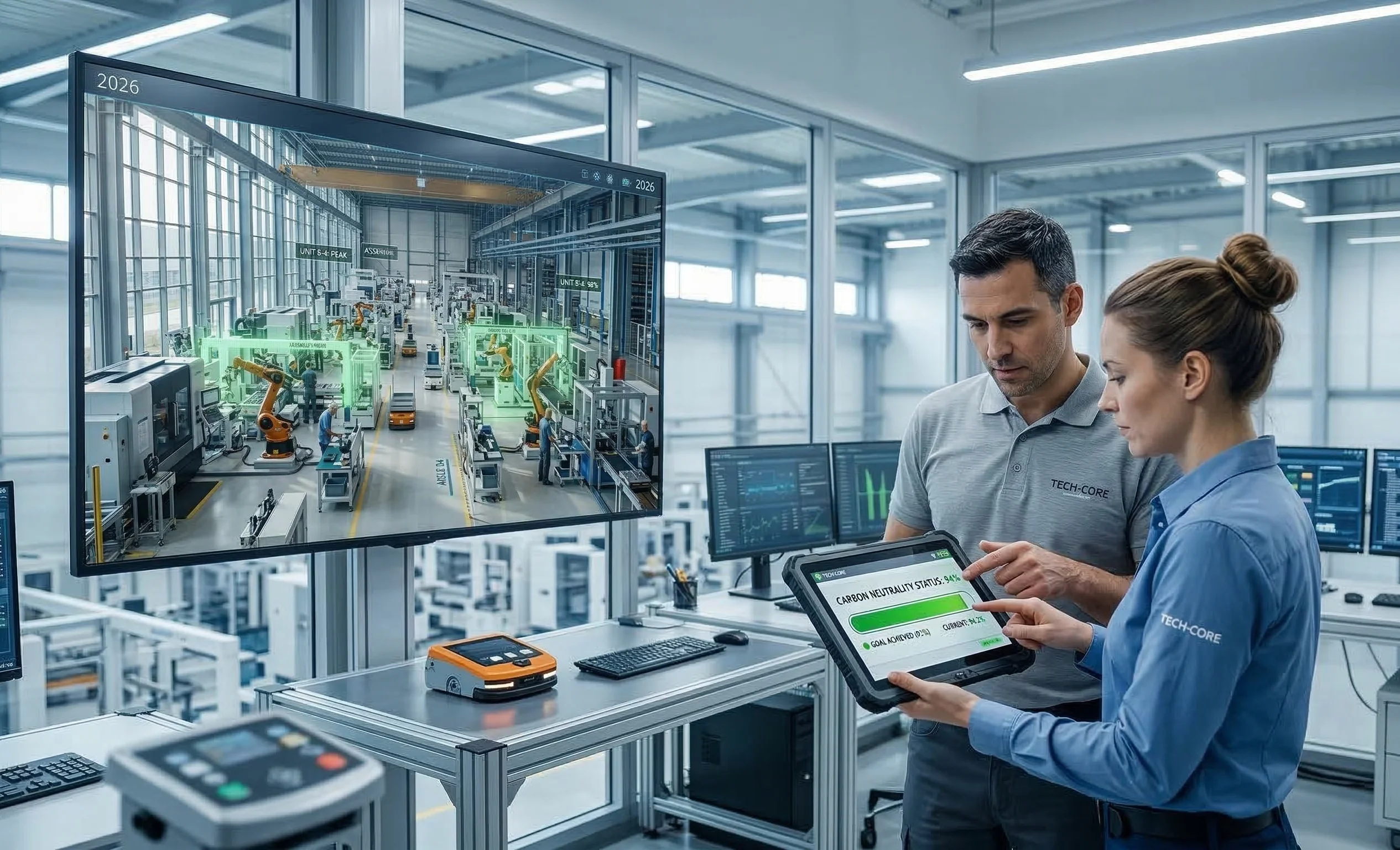
Audit-Ready Dashboards: Instead of guessing your carbon footprint for an annual report, our systems give you a live view of your emissions per production run.
Carbon-Aware Scheduling: We can set your heaviest data tasks to run when the local power grid is using the most wind or solar energy. This doesn’t just look good on a report—it often costs less because green energy is cheaper during peak production hours.
For the latest on these global standards, check out the iMasons Climate Accord, which is setting the benchmark for how digital infrastructure should report its carbon footprint in 2026.
A 4-Step Roadmap for Factory Leaders
Ready to start? Here is the simple way to do it without disrupting your production:
The Audit: Identify your “Zombie” workloads—the servers and apps that are eating power but haven’t been used in 30 days.
Automate: Deploy AIOps to monitor your energy usage 24/7. Let the AI handle the “sleep modes” for your tech so your team can focus on the floor.
Right-Size: Adjust your cloud resources so you are only paying for (and powering) exactly what you need for today’s production schedule.
Connect the Data: Link your cloud bill to your ESG reporting tool. This turns a “cost center” into a data point that proves your brand is a leader in sustainability.
Summary: Green is the New Black
In 2026, efficiency is the only way to stay competitive. If you are wasting electricity on the shop floor or in your cloud servers, you are handing your profit to the power company.
GreenOps isn’t just about the environment; it’s about building a leaner, faster, and more profitable manufacturing business. It turns “compliance” into a competitive advantage that helps you win bigger contracts and attract better talent.
Want to cut your energy bill and your carbon footprint?
Talk to a Cloud Specialist at Techelix. Let’s map out your GreenOps roadmap today.
Build custom AI solutions that deliver real business value
From strategy to deployment, we help you design, develop, and scale AI-powered software that solves complex problems and drives measurable outcomes.