AI Demand Forecasting in FMCG: Methods, Models & Real Examples

By Techelix editorial team

A global group of technologists, strategists, and creatives bringing the latest insights in AI, technology, healthcare, fintech, and more to shape the future of industries.

Contents

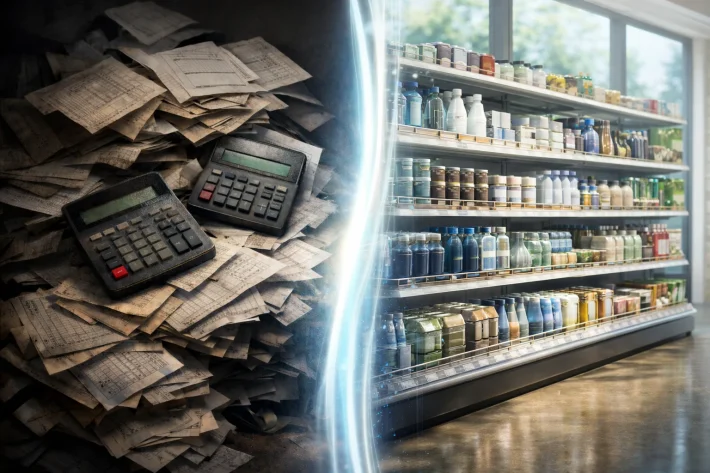
Here’s the thing: most FMCG companies are still being run by a “messy spreadsheet.” You know the one—it’s got fifty tabs, half the formulas are broken, and it’s based on what happened three years ago. In 2026, relying on that to predict your sales is like trying to drive a car while looking only in the rearview mirror. It’s a great way to crash.

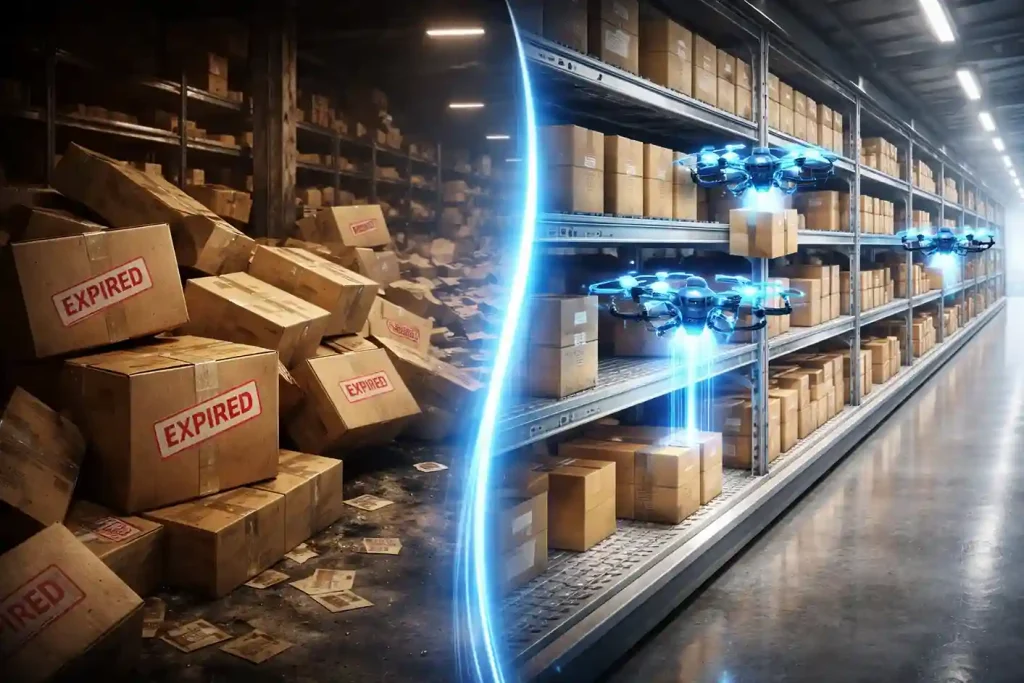
The FMCG world moves way too fast for old tools. A single viral video or an unseasonably warm weekend can make your “gut feeling” totally wrong. When that happens, you get hit with the “Bullwhip Effect.” This is that annoying cycle where a small ripple in customer demand turns into a massive wave of problems for your factory and warehouse. You either have empty shelves and angry customers, or you’re stuck with a mountain of product that’s about to expire.

This is why the “old way” is dying. Smart brands are realizing that they don’t need a better spreadsheet; they need a better brain.

Take a look at a company like Unilever. They’ve stopped guessing and started using AI to track everything from local weather to social media trends. By doing this, they’ve managed to cut down on waste and make sure their products are actually in the right place at the right time. It’s not magic—it’s just using a system that can process a million data points while you’re busy drinking your morning coffee.

And that’s why this matters. In a low-margin world, being 10% more accurate with your numbers isn’t just a “nice to have”—it’s how you stay on the shelf.

 

Why FMCG is the Hardest Game for Forecasting


If you’re selling furniture, your stock can sit in a warehouse for months and it’s fine. But in FMCG, you’re racing against a clock. Most of what you sell has an expiration date. If you over-predict demand, you’re literally throwing cash into the dumpster when that inventory spoils.

But it’s not just about things going bad. It’s the sheer volume of “stuff.” A typical brand might have hundreds of different flavors, sizes, and bundles. Trying to manually track demand for every single “SKU” across five hundred different stores is enough to make anyone’s head spin. It’s too much data for a human team to handle without making mistakes.

Then there are the “outside” factors that your average spreadsheet just can’t see. Your old models might know what you sold last Tuesday, but they don’t know that a competitor just launched a “Buy One Get One” deal, or that a major storm is about to close down the shipping routes.

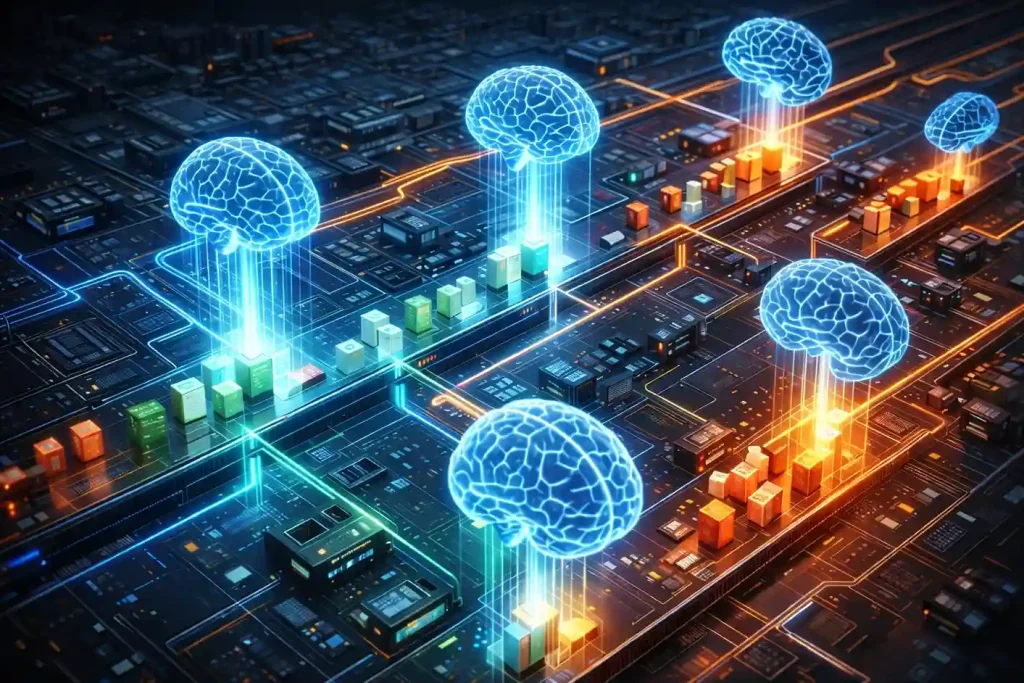
AI doesn’t just look at your past; it looks at the world around you. It pulls in all that messy, external data and actually makes sense of it so you don’t have to.


How AI Actually “Sees” Demand


If you ask a human planner how they forecast, they’ll probably say they look at what happened last month and add a bit for a planned promotion. AI does something similar, but it’s like having a team of a thousand planners working in seconds.

Here is how the magic actually happens:


Time Series Analysis: The Foundation


This is the “bread and butter” of forecasting. The AI looks at your historical sales data—usually 18 to 24 months’ worth—and finds the patterns you might miss. It identifies the “Horizontal” (stable) demand for basic goods, the “Seasonal” spikes (like ice cream in July), and the “Cyclical” trends that happen over years. But unlike a human, it can do this for every single store and every single product simultaneously.


Causal AI: Understanding the “Why”


This is where it gets really smart. Traditional models just see that sales went up. Causal AI asks why they went up. Did sales increase because of your price drop? Or was it because a competitor was out of stock? By understanding cause-and-effect, the AI can tell you: “If you run this promotion again next month, you can expect exactly a 12% lift.” It stops the guesswork and starts giving you actionable numbers.


Demand Sensing: The Real-Time Radar


While traditional forecasting looks at months, Demand Sensing looks at days. It uses machine learning to “sense” immediate shifts in the market. Maybe an influencer just posted about your product, or a sudden storm is keeping people at home. Demand sensing picks up these signals from real-time Point-of-Sale (POS) data and adjusts your supply chain in hours, not weeks.


Breaking Down the Models


When we talk about the “AI” part of forecasting, we aren’t just talking about one single program. It’s more like a toolbox. Depending on what you’re selling—whether it’s bread that spoils in three days or laundry detergent that lasts for years—you use a different “tool” or model.

Here’s the thing: you don’t need to be a data scientist to understand these, but knowing which one does what helps you see the value.


Random Forests & XGBoost: The Decision Makers


Think of these as a giant panel of experts. Each “expert” looks at a piece of your data—like historical sales, the weather, or a price change—and makes a vote on what the demand will be. The system then combines all those votes to give you one highly accurate number. It’s great at handling “non-linear” data, which is just a fancy way of saying it’s good at understanding that a 10% price cut might lead to a 50% jump in sales, not just 10%.


Recurrent Neural Networks (RNNs): The Memory Experts


These models are built specifically to understand sequences. They have a “memory” of what happened yesterday and how that affects today. For FMCG, this is perfect for tracking things like a product launch where sales are building momentum day by day.


Transformer Models: The New Gold Standard


You might have heard of Transformers because they power things like ChatGPT. In forecasting, they are the “next level.” They are incredibly good at looking at massive amounts of data from a long period of time and picking out the most important bits. They can spot a tiny trend buried in three years of data that other models would completely miss.


Inventory Optimization: The Direct Benefit of AI


Here’s the thing: demand forecasting is great, but it’s useless if it doesn’t change how you actually stock your shelves. This is where the ROI happens. In a typical FMCG setup, you’re constantly fighting two monsters: “Out-of-Stock” and “Overstock.”

If you run out of a popular snack, the customer doesn’t wait—they just buy the competitor’s brand. That’s a lost sale you’ll never get back. On the flip side, if you over-order, you’re paying to store products that might expire before they ever reach a shopping cart.

AI fixes this by creating a “Dynamic Buffer.” Instead of having a flat rule like “always keep 50 cases in stock,” the system adjusts based on reality. If the AI sees a trend cooling down, it tells you to stop ordering weeks before the human planners would notice. This keeps your cash flow moving instead of letting it rot in a warehouse.

It’s also about “Safety Stock.” Traditionally, companies keep extra stock “just in case.” AI makes that “just in case” much smaller and more accurate. It calculates exactly how much extra you need based on lead times from your suppliers and the likelihood of a sudden surge.

The result? You have exactly what you need, exactly when you need it. No more, no less.


Real-World Examples: How the Giants Do It


It’s easy to talk about AI in the abstract, but seeing it in action at a massive scale changes things. The biggest FMCG companies in the world aren’t just “testing” AI anymore—they’ve built their entire supply chain around it.


The Beverage Giant Strategy


Take a look at companies like Coca-Cola. They deal with massive seasonal shifts and local events. By using AI to analyze local weather forecasts alongside historical sales, they can predict exactly when a city is going to have a heatwave. This allows them to shift their inventory to those specific regions days before the temperature even climbs. They aren’t just reacting to the heat; they’re already there waiting for it.


Snack Foods and Social Sentiment


Then you have brands like PepsiCo. They’ve experimented with using AI to listen to what people are saying online. If a specific flavor starts trending on social media, their AI systems can pick up that “signal” and alert the production team to ramp up before the shelves go empty. It turns a “guess” into a data-driven production plan.


The Rise of AI-Native Brands


Even retailers like Walmart are using these systems to manage their private-label FMCG goods. By using machine learning to track thousands of variables—from local sports games to construction near a store—they ensure they don’t have milk expiring on the shelf or bread running out by noon.

These companies show that AI isn’t about replacing the people who run the business. It’s about giving those people the best possible data so they can make moves that actually impact the bottom line.


Implementing AI Without Breaking Your Current System


Here’s the thing: you don’t need to throw away your current ERP or your legacy management systems to start using AI. A lot of companies think they need to do a “total rebuild,” but that’s a great way to waste a year and a lot of money.

The smart way to do it is with a “Layered” approach. You keep your existing data where it is, and you add an AI layer on top of it. This layer “reads” your data, processes it through the models we talked about, and then sends the refined forecast back into your system. It’s like giving your current software a brain upgrade without the surgery.

But before you start, you have to look at your data. AI is incredibly powerful, but if you feed it “garbage” data (like missing sales figures or incorrect inventory counts), it’s going to give you “garbage” forecasts. That’s why the first step isn’t picking a model; it’s cleaning your data.

Once your data is ready, we usually recommend starting with a Pilot Program. Pick one product line or one region. Test the AI against your human planners for three months. When you see the AI outperforming the old spreadsheets—which it will—you then roll it out to the rest of the company.


Common Pitfalls to Avoid When Moving to AI


Let’s be honest: AI isn’t a magic wand. If you just buy the most expensive software and expect it to solve everything overnight, you’re going to be disappointed. We’ve seen where companies stumble, and it usually comes down to three things.


The “Black Box” Problem


If your AI tells you to double your production of orange juice, but your planners have no idea why it made that choice, they won’t trust the system. You need “Explainable AI.” The goal isn’t just to get a number; it’s to understand the logic behind it so your team can make informed decisions.


Ignoring “Black Swan” Events


AI is great at patterns, but it can struggle with things that have never happened before—like a global pandemic or a sudden trade war. If you rely 100% on historical data during a major crisis, the AI will fail. You always need a human-in-the-loop to say, “Hey, the world just changed, let’s adjust the parameters.”


The Data Silo Trap


If your sales data is in one system, your marketing data is in another, and your warehouse data is on a whiteboard in the back room, the AI can’t do its job. AI thrives on connections. If you don’t break down those walls and get all your data talking to each other, you’re only getting a fraction of the power you’re paying for.


Conclusion: The Competitive Edge in a Low-Margin World


A professional standing in a clean, modern warehouse holding a tablet that displays a “Demand vs. Supply” graph with a large green “Optimized” badge in the center. The lines on the graph are balanced, indicating alignment between demand and supply. In the background, shelves of organized inventory line the warehouse, and a delivery truck is pulling away from the loading dock, symbolizing efficiency, control, and successful operations.In the FMCG industry, the margins are razor-thin. You don’t have room for “guesswork” or “gut feelings” anymore. Every case of product that expires on a shelf is a direct hit to your bottom line.

Moving to AI demand forecasting isn’t just about being “high-tech.” It’s about survival. It’s about making sure that when a customer walks into a store looking for your product, it’s actually there. And it’s about making sure your capital isn’t tied up in inventory that nobody wants.

The companies that win in the next five years will be the ones that stopped fighting with spreadsheets and started leveraging their data. Whether you start with a small pilot or a full supply chain overhaul, the best time to start was yesterday. The second best time is now.

Build custom AI solutions that deliver real business value

From strategy to deployment, we help you design, develop, and scale AI-powered software that solves complex problems and drives measurable outcomes.

Facebook
Twitter
LinkedIn

Recent Post

Your journey to innovation starts here

Let’s bring your vision to life with our expertise in AI and custom development. Reach out to us to discuss your project today!