
The “Shadow Bot” Crisis
In 2026, the greatest threat to enterprise stability isn’t a hooded hacker in a remote basement; it’s an over-eager department head with a credit card and a “no-code” login. As the barrier to entry for automation dropped, “Shadow IT” evolved into the “Shadow Bot” Crisis. These are automated processes running on unmanaged local desktops, often using the creator’s own credentials or, worse, shared “admin” passwords stored in plain-text .env files or “secure” Excel sheets.
The “Ghost Employee” Problem
An unsecured bot is effectively a “Ghost Employee” with the keys to your entire digital kingdom. Unlike a human employee, a bot doesn’t get tired, it doesn’t take breaks, and it can execute thousands of malicious commands in the time it takes a human to blink. If a single bot in your Finance department is compromised via a side-channel attack, the attacker doesn’t just get access to that bot; they inherit every permission that bot was given. This often includes legacy mainframes, modern ERPs (like SAP or Oracle), and sensitive customer PII (Personally Identifiable Information).
In this guide, we move beyond “simple automation” and into Secure RPA Infrastructure. In 2026, the bot is no longer a tool; it is a High-Risk Non-Human Identity (NHI) that must be governed with the same—if not more—rigor as a privileged C-suite executive.
The Zero-Trust Framework: Never Trust, Always Verify
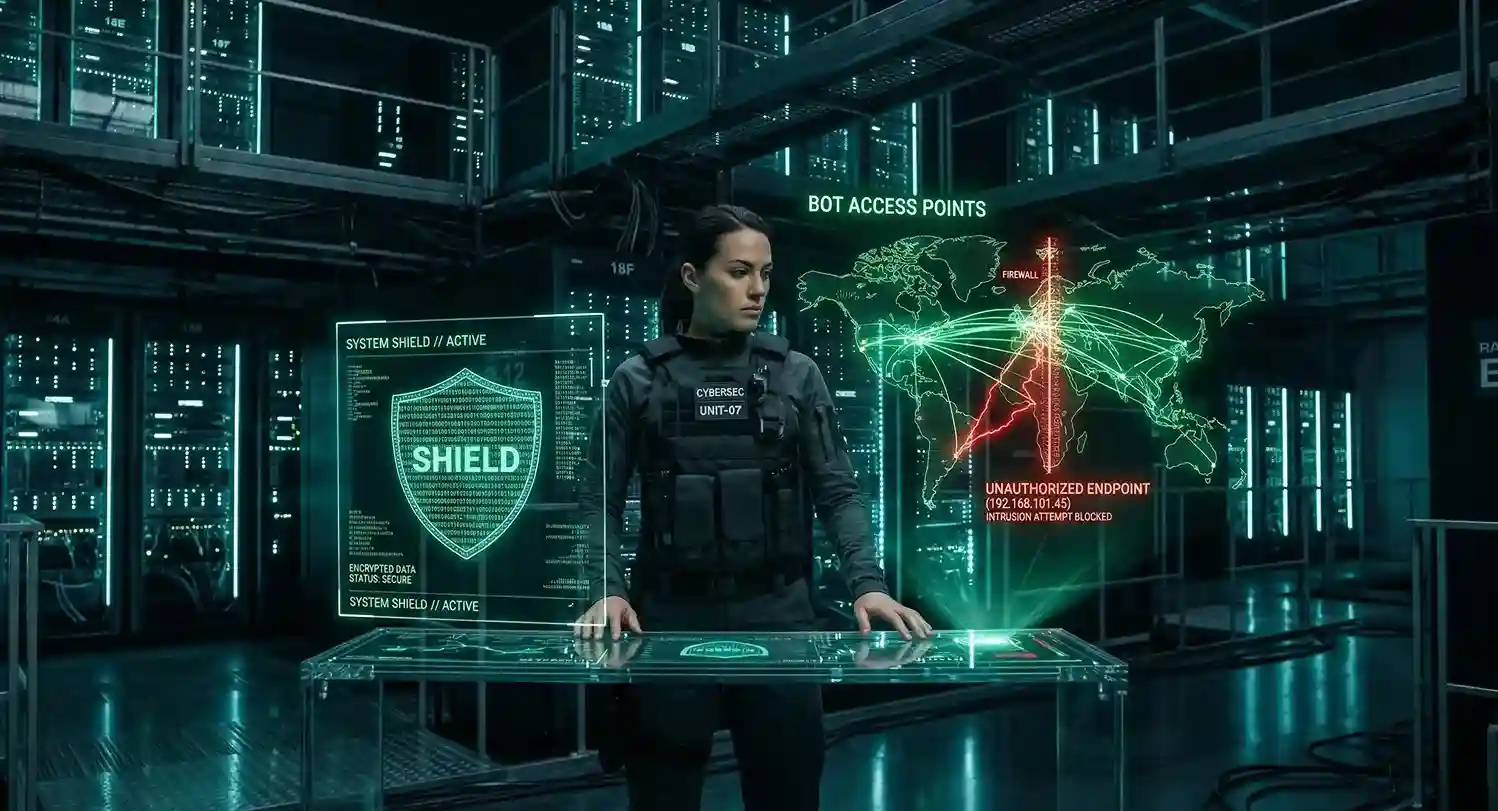
The industry standard for 2026 is Zero-Trust Architecture (ZTA). In a traditional network, once you are “inside” the firewall, you are trusted. In a Zero-Trust environment, we assume that the network is already compromised. Therefore, we never grant a bot “Permanent Access”.
Micro-Segmentation and the “Blast Cell” Strategy
When we architect a secure RPA infrastructure, we use micro-segmentation to ensure that your bots are “siloed.” Imagine your network as a submarine with multiple watertight compartments. If one compartment (a bot processing marketing leads) springs a leak (gets compromised), you seal the door.
The Finance Silo: A bot processing payroll physically resides on a network segment that is mathematically incapable of communicating with the Marketing or HR databases.
The Principle of Least Privilege (PoLP): A bot should only have the absolute minimum permissions required to complete its task. If a bot needs to read an invoice, it should never have write or delete access to the folder.
By creating these “Blast Cells,” we ensure that a security breach in one corner of the office doesn’t lead to a total enterprise collapse.
Credential Management: The End of Hardcoded Logins
In the early days of automation, developers often took the path of least resistance: hardcoding credentials directly into the bot’s script or storing them in a “secure” Excel file. In 2026, this is the equivalent of leaving your vault keys under the doormat. A secure RPA infrastructure requires that the bot never actually “knows” its own password.
The Role of the Credential Vault
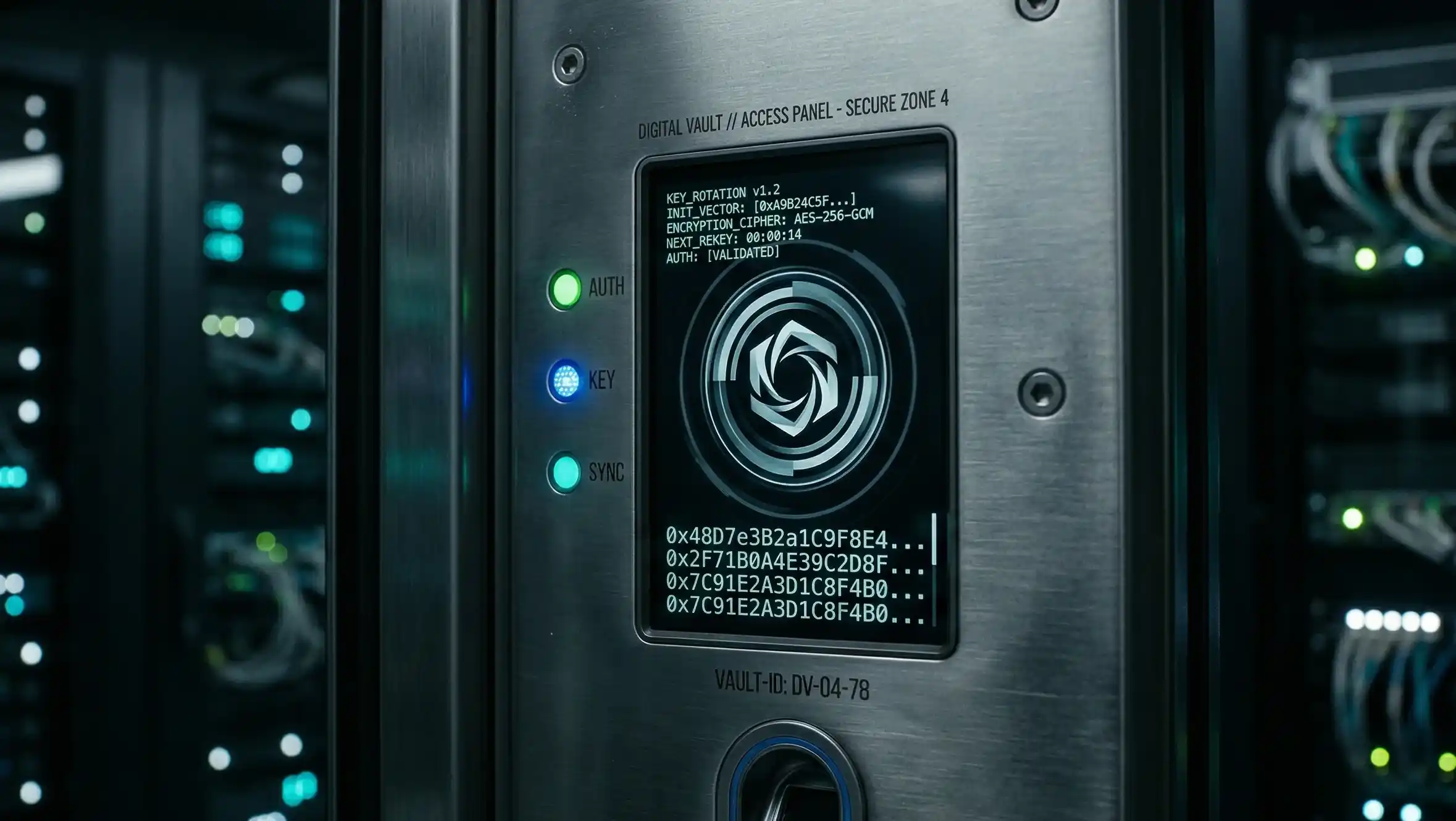
Modern RPA governance demands integration with enterprise-grade vaults like HashiCorp Vault, CyberArk, or Azure Key Vault. When a Techelix-engineered bot needs to log into an ERP, it doesn’t look at a local variable. It makes a secure, encrypted request to the vault, retrieves a one-time-use token, and authenticates. Once the task is complete, that token is invalidated.
Just-in-Time (JIT) Access & Key Rotation
We implement Just-in-Time (JIT) Access, meaning the bot is a “ghost” until the exact microsecond it needs to work. By automating Key Rotation, we ensure that even if an attacker manages to intercept a credential, that credential will be useless by the time they try to use it. This strategy effectively neutralizes “Credential Harvesting,” one of the most common attack vectors in 2026.
Bot Identity Management (BIM): Who is that Robot?
If you can’t identify exactly which bot performed an action, you have a massive governance gap. In 2026, we treat bots as Non-Human Entities (NHEs) with their own unique digital thumbprints.
Machine Identities and Attestation
Every bot deployed by Techelix is assigned a unique Machine ID. Before the bot is allowed to touch production data, it must pass an Attestation Check. The system verifies the “Check-sum” of the bot’s code to ensure it hasn’t been tampered with or injected with malicious scripts during transit. If the code has changed by even one bit, the Zero-Trust gate slams shut.
Behavioral Monitoring: The “Rogue Bot” Detector
Even a “good” bot can go bad if its environment changes. We use AI-driven Behavioral Monitoring to establish a “Normal Baseline” for every bot. If a bot that usually processes 50 invoices a day suddenly starts downloading 5,000 customer records at 3:00 AM, the system flags it as a “Bad Actor” and kills the session instantly.
Governance & Compliance: The Road to SOC 2 & HIPAA
For a software house, compliance isn’t just about a badge on the website; it’s about survival. To handle data in healthcare or finance, your RPA stack must be an open book for auditors.
The Immutable Audit Trail
In a Techelix-engineered stack, every action is logged in a Write-Once-Read-Many (WORM) storage. These logs are:
Granular: They record every API call, every data transformation, and every “Handshake” with the Credential Vault.
Tamper-Proof: Even an administrator with “Root Access” cannot delete or modify these logs. This ensures that when an auditor arrives, you have a 100% accurate history of your autonomous workforce.
Separation of Duties (SoD)
We enforce a strict Separation of Duties. The developer who writes the RPA code cannot be the person who moves it into production. By requiring a multi-signature approval process, we eliminate the risk of “Inside Threats” where a disgruntled employee could bake a backdoor into an autonomous agent.
Infrastructure Hardening: Securing the Execution Environment
The “where” is just as important as the “how.” Running bots on a shared office network is an invitation for disaster.
VPC Isolation and Container Hardening
We run RPA workers in Isolated Virtual Private Clouds (VPCs). These environments are “dark”—they have no public IP addresses and are only accessible via secure VPNs or internal VPC peering. For n8n or Python-based workers, we use Hardened Docker Containers. We strip away every unnecessary service, shell, and package, leaving only the bare minimum required for execution. This minimizes the “Attack Surface” and ensures that even if a bot is somehow compromised, there is no “shell” for the hacker to hide in.
Explore our Strategic RPA Consulting to build a compliant, SOC 2-ready automation engine.
Technical Security Checklist for RPA Developers
To help your team maintain these standards, here is the Techelix “Secure-by-Design” checklist for every bot deployment:
Identity: Does the bot have a unique NHE (Non-Human Entity) ID?
Vaulting: Are all credentials pulled via API from a secure vault? (No hardcoding).
Permissions: Is the bot limited to “Read-Only” where possible? (Principle of Least Privilege).
Logging: Are logs being pushed to an external, immutable log manager?
Attestation: Is there a pre-run check to verify code integrity?
Network: Is the execution worker running in a non-routable VPC segment?
Summary: Building a Culture of Secure Automation
In 2026, security is no longer a “Blocker”—it is the Enabler of scale. Without a Zero-Trust foundation, your automation efforts will eventually hit a wall of legal or technical risk. With it, you have the freedom to innovate at the speed of thought.
An secured bot is your most loyal, tireless, and compliant employee. At Techelix, we don’t just build bots; we build fortresses of efficiency.
Ready to secure your digital workforce? Book a Techelix Security Audit today and let’s turn your “Shadow Bots” into a world-class, governed infrastructure.
Build custom AI solutions that deliver real business value
From strategy to deployment, we help you design, develop, and scale AI-powered software that solves complex problems and drives measurable outcomes.